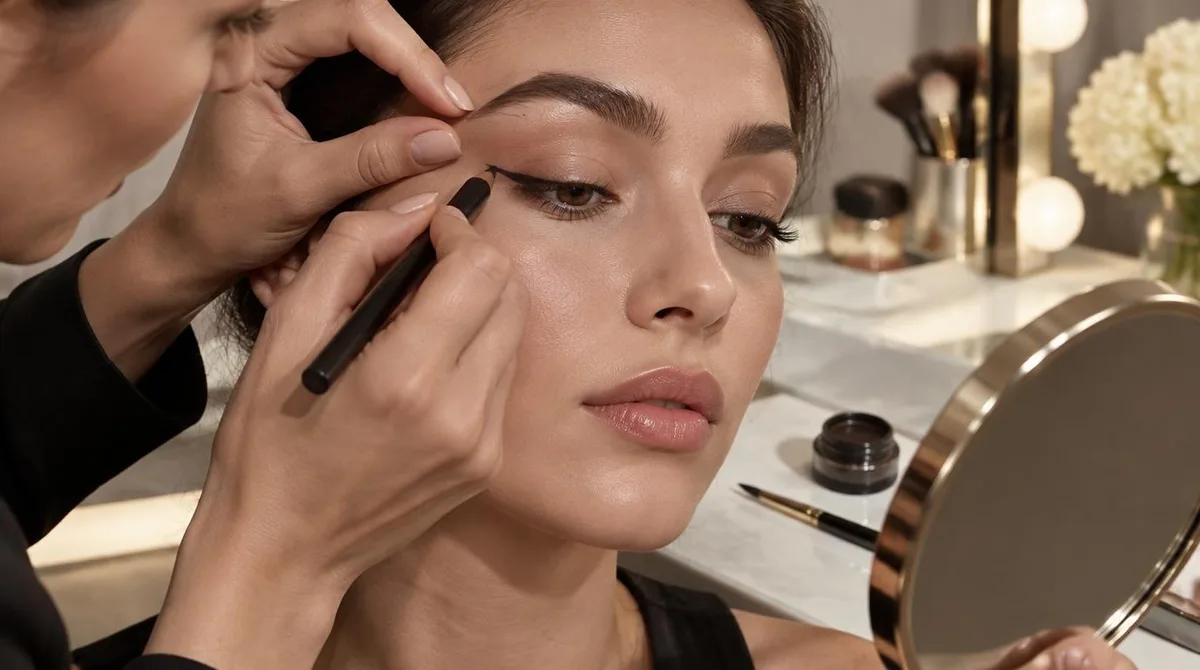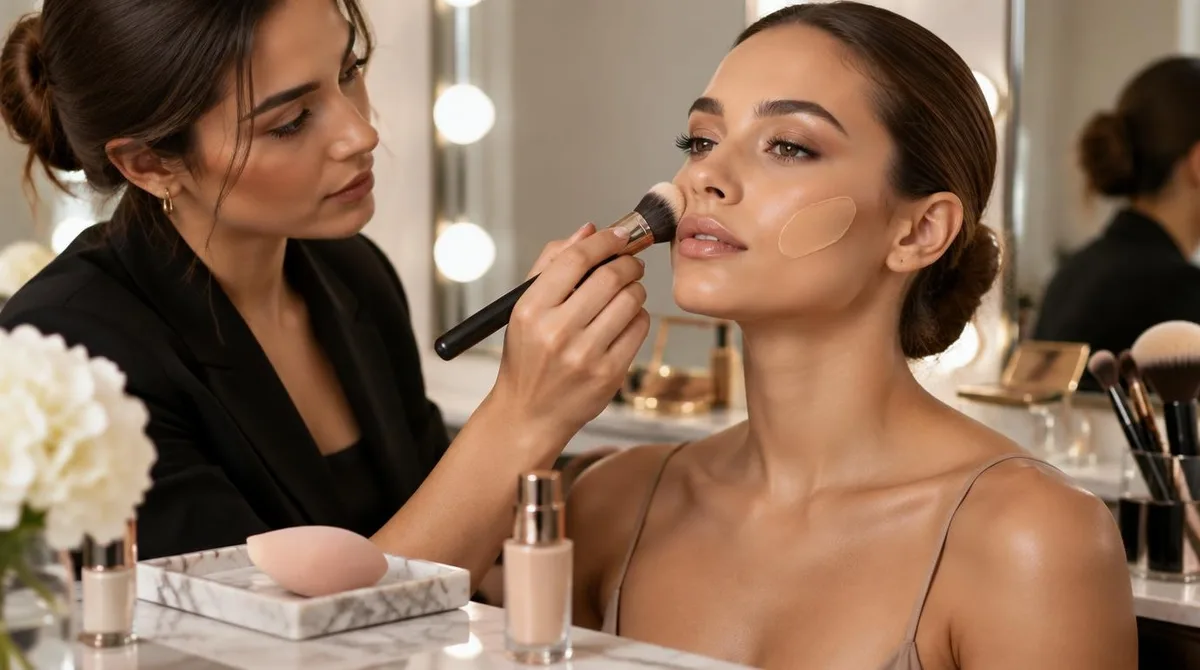
Nobody needs both tools to get dressed, but each one builds a different face. A dense foundation brush deposits extra product and pushes coverage toward full, while a damp makeup sponge sheers that same foundation into a skin-like wash, per the tool brand Real Techniques and its own comparison guide. The honest answer to sponge versus brush: pick by the finish you want, then clean whatever lands on the skin.
Hygiene carries its own weight here. The American Academy of Dermatology states plainly that dirty brushes and sponges can cause acne breakouts, rashes, and skin infections. Its published guidance also names a schedule: dermatologist Dr. Bailey says sponges should be cleaned after every use. What follows sorts out the finish question first, then the cleaning one. This connects to our earlier piece, Mineral vs. Chemical Sunscreen: Which One Should You Actually Buy?.
What Does a Foundation Brush Actually Do?
A makeup brush is a tool with bristles used to apply makeup, and densely packed versions such as the kabuki apply liquid foundations and provide full coverage, per the encyclopedia’s overview of brush types. Real Techniques’ guide adds the mechanics: dense bristles pick up more foundation without absorbing it, so more product reaches the skin and coverage stacks in layers. That is the brush deal. More color lands where the bristles touch.
The trade-off shows up on textured skin. The same brand guide cautions that the extra coverage a brush delivers can highlight texture such as larger pores or dry patches instead of hiding it. Streaks are the other risk, which the brand blames on long sweeping motions rather than on the tool itself. For related coverage, see Rice Water for Skin: What the Evidence Actually Supports.
What Does a Damp Sponge Do Differently?
A makeup sponge is a foam applicator that works well damp for liquid and cream base. Real Techniques’ guide says a damp sponge sheers out product and melts it into skin for a natural finish, and it recommends dabbing rather than swiping so coverage stays even. The brand also calls the sponge forgiving for beginners, because it is harder to over-apply with a press than with a stroke.
Absorption is the price. The brand’s own pros-and-cons table flags that a sponge soaks up more product, which means bottles empty faster than they would with a brush. Sponges also struggle with powder formulas, which the guide says can turn patchy under a tapping motion.
Which Tool Should Acne-Prone Skin Pick?
Whichever one gets washed. Dirty tools can cause acne breakouts, rashes, and skin infections, per the American Academy of Dermatology, so the tool matters less than the rinse cycle. Sponge owners get the stricter rule. Dr. Bailey, quoted in the academy’s guidance, says sponges should be cleaned after every use. For brushes, dermatologist Dr. Spearman points to studies in the same guidance.
- 1. Soak the sponge in a bowl of warm water with a few drops of liquid cleanser, then massage the soap in for 15 seconds, per the academy’s instructions.
- 2. Rinse the sponge under warm running water until the water runs clear, squeeze out the excess, and air dry it on a clean paper towel.
- 3. Clean makeup brushes every 7 to 10 days, the interval Dr. Spearman ties to studies in the academy’s published guidance.
- 4. Never share makeup applied with a brush or sponge, the academy advises, because tools that touch skin directly can pass bacteria along.
Which Finish Should Guide the Choice?
The decision turns mechanical once the goal is set. Real Techniques, which sells both tools, splits the call by what the skin needs from a base, and its guide lays the trade-offs out in one table.
- Full, buildable coverage: a brush, because dense bristles deposit product without soaking any of it up.
- A sheer, skin-like finish: a damp sponge, which thins product out as it presses it in.
- Pores or dry patches: a damp sponge, since bouncing conceals texture instead of spotlighting it.
- Precision around the nose and eyes: a brush, whose shaped bristles reach corners a sponge skips.
- Powder products: a brush, because sponges can leave powder looking patchy.
Conclusion: Pick the Finish, Then Keep It Clean
The sponge-versus-brush debate dissolves into two smaller questions. First, what finish does the base need, a brush for coverage that stacks or a damp sponge for a wash of color that melts in. Second, what cleaning schedule can the habit sustain, because the American Academy of Dermatology ties dirty tools to breakouts, rashes, and infections. A cleaned sponge beats a filthy brush every time. Both answers come from documented guidance, which is more than most makeup arguments can claim.