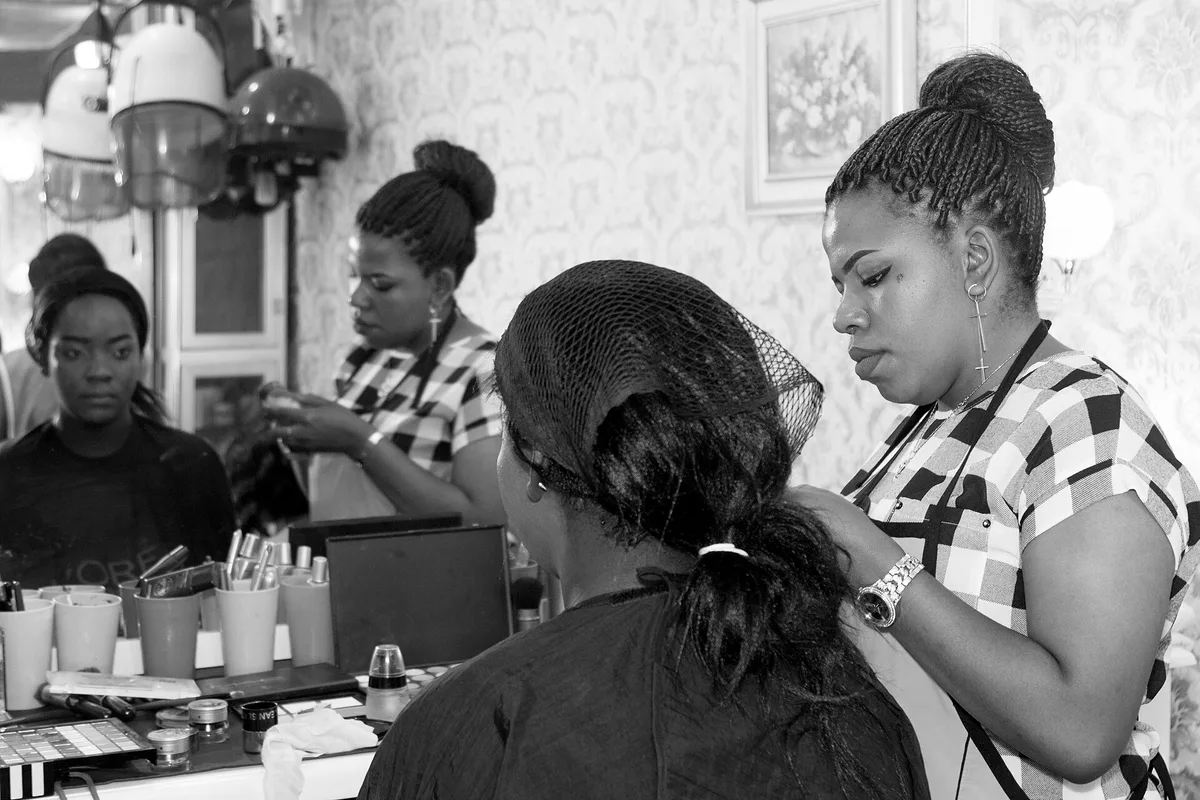
A makeup artist on set does three jobs at once: prepping skin so makeup behaves, building a look that survives hot lights and long hours, and watching the face all day so nothing drifts. The artistry gets the attention, but most of the work is logistics. A reliable kit, a calm skin-prep routine, and a touch-up plan matter more than any single technique.
That matters to you even if you never hire anyone. The same sequence an artist follows before a shoot is the sequence that keeps your own makeup looking fresh at hour eight. Here is what actually happens, in order, and why each step earns its place.
What goes into kit prep before a shoot?
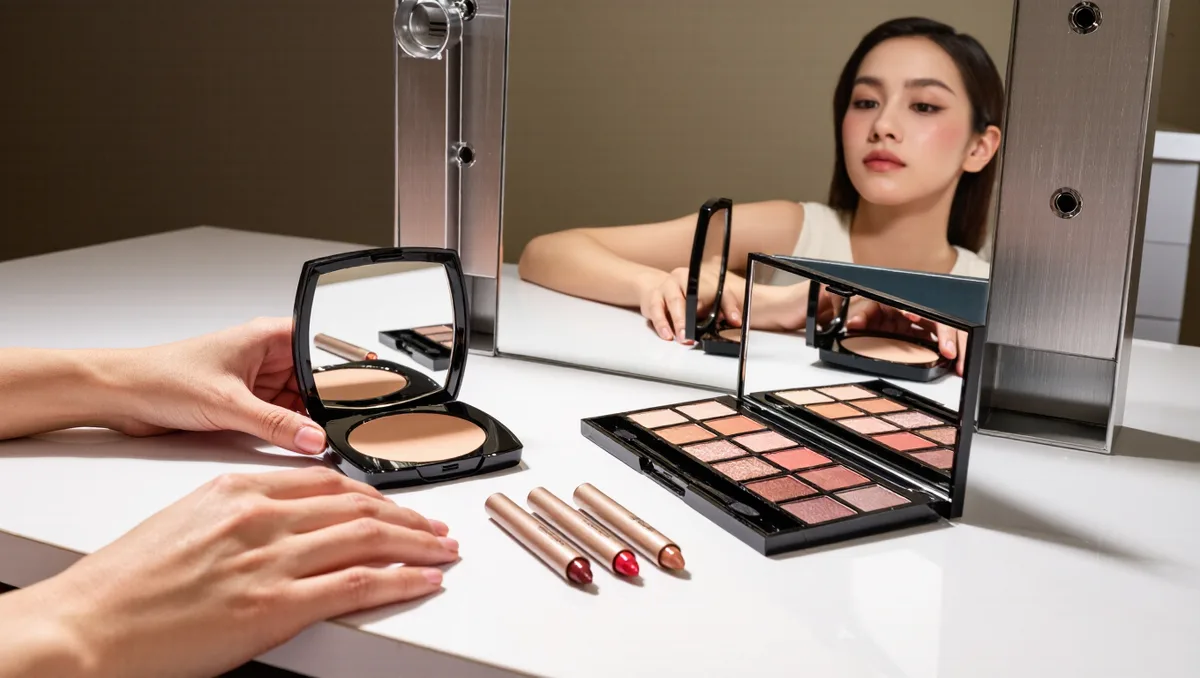
Kit prep starts the night before, not in the parking lot. An artist sorts products by job: face, eyes, lips, tools. The core face kit mirrors the basics any retailer organizes around — primer, foundation, concealer, and bronzer for dimension, as Ulta Beauty lays out in its own makeup guide — plus powders, blush, and highlighter in both cream and powder textures. Creams read as skin on camera. Powders lock things down. An artist brings both because lighting and skin type decide which one wins on the day.
Shade range gets checked too. A set can book anyone, so kits carry foundations and concealers across deep, medium, and fair tones, in warm, cool, and neutral undertones. Tools get their own attention: clean sponges, a set of brushes for powder and detail work, and a good mirror, because lighting on location is rarely kind. Hygiene supplies travel with the kit — brush cleaner, alcohol, spatulas, and disposable wands — since product goes back into the same pan all day.
The last step is practical: batteries, phone chargers, blotting sheets, cotton pads, and a small sewing kit. On a shoot, the makeup artist is often the person with the answer to everything, so the bag reflects that.
Why does skin prep come before any makeup?
Makeup sits on skin. If skin is dry, flaky, or oily in the wrong places, no foundation hides that for long. So the artist starts with skincare, not makeup: cleanse, then hydrate with a lightweight moisturizer, then let it absorb. Thin layers work better than one heavy one. Heavy layers under foundation can pill or slide, especially under warm lighting.
Primer comes next, chosen for the problem in front of the artist. A mattifying primer where skin shines, a hydrating one where it looks dull. The goal is an even canvas, not a sealed one — skin still needs to move. Artists also watch the clock here. Moisturizer that has not settled can cause foundation to break apart an hour later, so a few minutes of waiting is part of the job, not a delay.
If you build your own routine, the same logic applies. Our guide to the right sequence for skincare, SPF, primer, and foundation walks through the order and why each layer needs a moment before the next one goes on. For related coverage, see Makeup Order, Explained: Skincare, SPF, Primer, Foundation — the Right Sequence.
How is a set makeup look actually built?
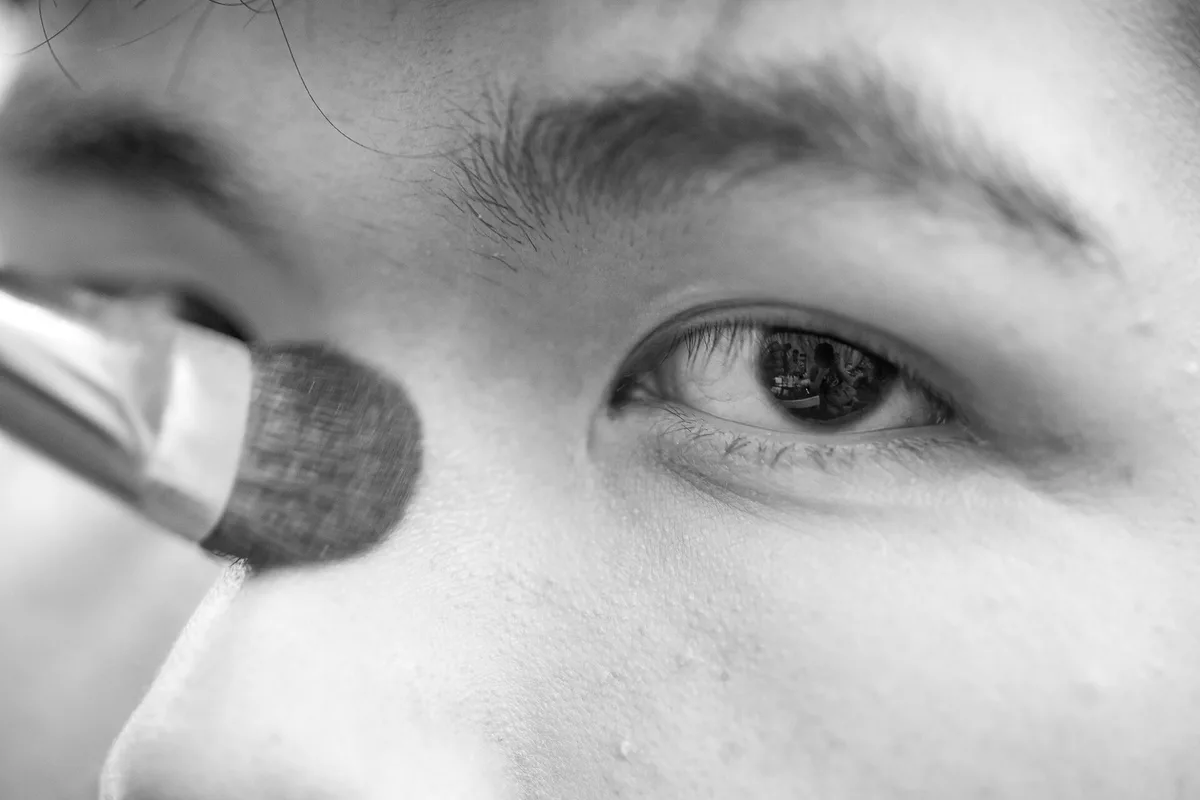
The build is thin and deliberate. Foundation goes on in sheer layers, usually with a sponge, so coverage lands only where it is needed. Concealer follows as a spot treatment, not a second full face. Cream blush and cream contour come before any powder, because cream products need to grip something — either bare skin or another cream — or they lift.
Then powder, sparingly. Artists powder only the zones that shine on camera, usually the center of the face, and leave the rest alone. Powder everywhere flattens skin and catches texture. Brows, eyes, and lips come last, when the face is stable and the clock is closer to call time.
Throughout, the artist checks the light the camera will actually see, not the mirror in the corner. Flash and hot lights change everything: a foundation that looks natural in daylight can flash back white or oxidize darker. That is why a look is judged at the monitor, not at the makeup station.
What does a makeup artist do between takes?
Touch-ups are the quiet half of the job. Between takes, the artist watches for four things: shine, creasing, transfer, and color drift. Blotting paper lifts oil without disturbing base. A tiny amount of powder, pressed with a puff rather than swept, resets the T-zone. Lipstick gets refreshed after every food or coffee break, because it never survives one.
Under the eyes gets special attention. Concealer in that area creases with movement and heat, so artists press the product in with a warm fingertip or sponge rather than layering more on top. If a line has already formed, the fix is to remove a little product, not add more. The same principle holds for texture anywhere on the face: build less, press more.
The artist also tracks time. A look built at 7 a.m. has to survive a 12-hour day, so the plan is front-loaded: the most durable products and techniques go on first, and anything delicate is designed to be easy to fix. Long-wear formulas, a strong setting step, and a touch-up kit staged within reach are the strategy, not an afterthought.
What can you borrow from a set makeup routine?
Three habits translate directly to daily life.
- Prep for your skin, not for the trend. Match your moisturizer and primer to what your skin does by afternoon, not to what looks good in the store.
- Build thin, press, then judge. Sheer layers pressed in with a sponge last longer than one thick layer swept on. Check your face in the light you will actually be in — daylight by a window beats a dim bathroom mirror.
- Stage your touch-ups. Blotting sheets, a small powder, and your lip color in a bag you can reach. Fixing shine takes one minute if the tools are at hand.
One more thing worth copying: artists separate texture from treatment. Makeup is texture — it changes how skin looks today. Skincare is treatment — it changes how skin behaves over weeks. An artist never expects foundation to fix skin, and that expectation is exactly why the work holds up. If your base keeps failing, the answer is usually in the prep, not the product. Our guide to doing makeup that looks good on camera covers the flashback and finish questions that come up most once the base is right. We covered a connected angle in How to Do Makeup That Looks Good on Camera: Flashback, Texture, and Finish.
The takeaway
A makeup artist's job on set is preparation, restraint, and vigilance. The kit is organized before anyone arrives. Skin is prepped until it behaves. Makeup goes on in thin layers, gets locked only where it needs locking, and is watched all day so small problems stay small. None of it requires professional training to borrow. It requires doing the unglamorous steps in order and resisting the urge to add more product when something moves.