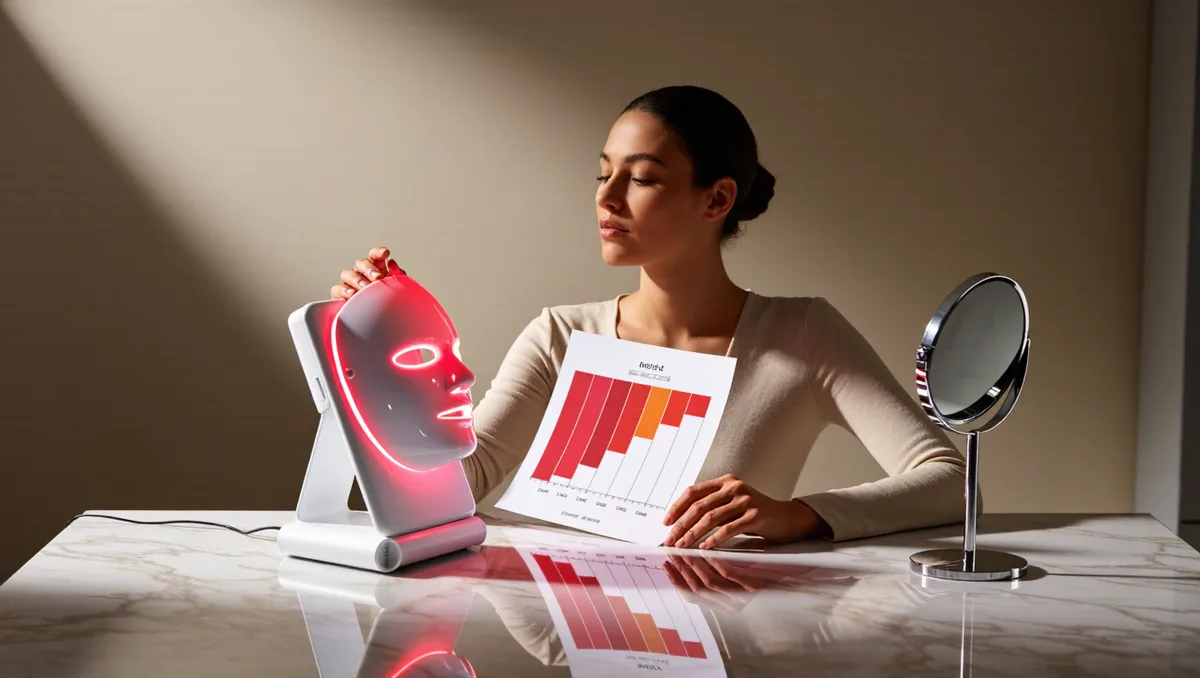
At-home LED masks deserve a device-by-device reading, rather than a blanket verdict on red light. The American Academy of Dermatology says home devices differ from the more powerful equipment dermatologists use, and more research is needed. A mask's regulatory status and evidence for its advertised result answer different questions.
What does the evidence say about home devices?
In its guide to red-light therapy, the American Academy of Dermatology describes treatment with red or near-infrared light, also called photobiomodulation. The academy reports promising research while stressing uncertainty over which devices work best, treatment schedules and long-term effects.
That leaves a practical question for any purchase: what evidence concerns this particular device and its stated use? A study of one piece of equipment doesn't establish how every mask performs. Beauty Ring hasn't tested or ranked individual masks for this article. This connects to our earlier piece, Rice Water for Skin: What the Evidence Actually Supports.
What does FDA clearance actually establish?
The FDA describes the distinction in its explanation of medical-device oversight and the 510(k) process. A 510(k) submission seeks to show substantial equivalence to a legally marketed device. FDA review considers the intended use and technological characteristics, with performance data where needed.
Premarket approval, or PMA, is a different review pathway. The FDA explains that it independently assesses safety and effectiveness for the proposed use of a high-risk device. These terms shouldn't be swapped around in a product description.
For a reader comparing masks, the distinction is useful because a regulatory claim has a scope. The exact device name and stated indication matter more than a loose reference to the FDA. A clearance for one intended use doesn't supply evidence for every extra benefit in an advertisement.
Which details belong in a useful comparison?
Start with the product's exact model and the claim being made. Then separate the device's regulatory record from any study the seller cites. Check whether that study concerns the same equipment and measures the result being advertised. Those are questions for evaluating documentation, not a promise that a mask will deliver a particular change.
A comparison should also disclose its limits. Without a verified device-specific study, a claimed timetable or a percentage improvement would add confidence the evidence pack doesn't support. Without a documented test, calling one mask the best would be a verdict without the work behind it. Readers following this should also see Mineral vs. Chemical Sunscreen: Which One Should You Actually Buy?.
What should be checked before use?
The American Academy of Dermatology recommends discussing suitability with a board-certified dermatologist, particularly where a skin condition or a medication may affect sensitivity to light. It also advises following device instructions, including eye protection where directed. The academy says FDA clearance doesn't guarantee a cosmetic result.
The useful purchase document is therefore specific: a model, a clearly stated use and evidence that can be read. A glowing photograph of the mask is much less informative.