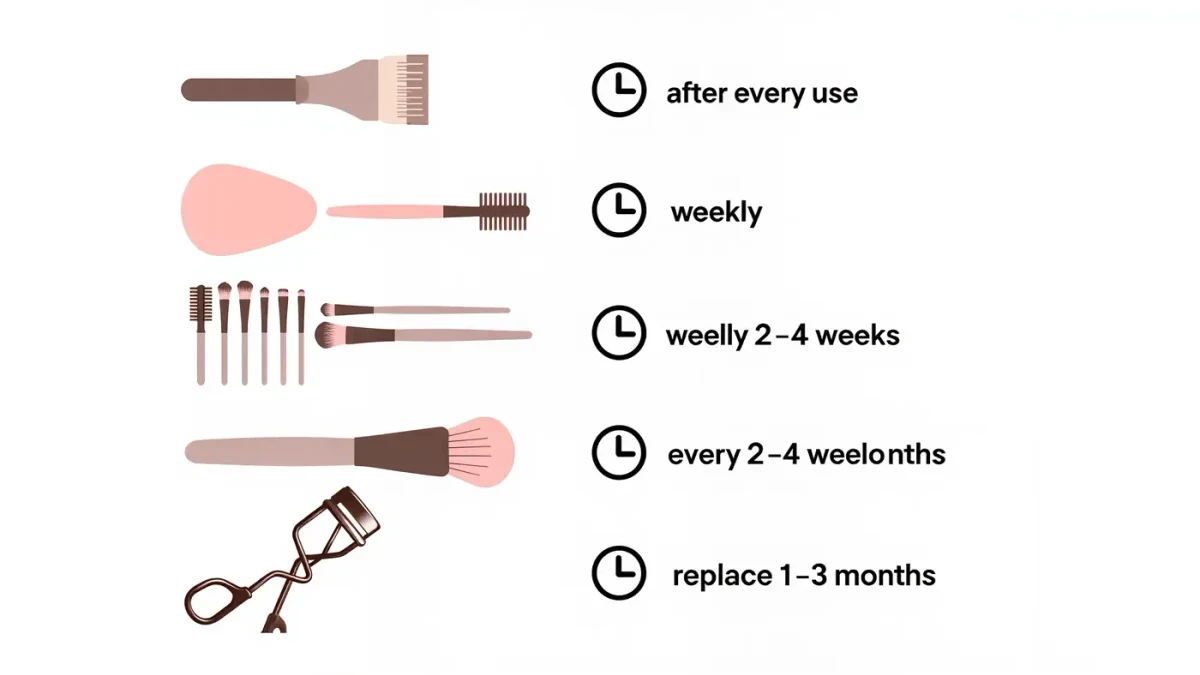
The practical cleaning schedule is layered by product type: brushes used for liquid or cream foundation need washing about once a week, brushes used around the eyes should be cleaned after every use with liquid products and at minimum weekly, and beauty sponges need cleaning after every session and replacing every one to three months. The reason is arithmetic rather than aesthetics — a used brush carries old product, skin cells, and bacteria back onto your face daily, and dermatologists link shared or dirty eye brushes directly to eye irritation and infections.
If an eye is already red, swollen, or discharging, stop using eye makeup entirely and see a doctor — cleaning a brush will not treat an existing infection. The schedule and technique below combine dermatologists' published hygiene guidance with the care instructions brush makers give for their own bristles.
What actually lives on an unwashed brush?
Three layers of unwanted cargo. Old product builds up inside the bristle head and stiffens it, which degrades application long before hygiene becomes the issue. Skin debris — dead cells and sebum transferred from your face at every stroke — feeds bacteria that then multiply in the damp ferrule. And airborne dust settles into the residue. Studies of used cosmetics and brushes have found microbial contamination to be common, and dermatology guidance warns that contaminated eye products in particular can cause conjunctivitis and, in worst cases, serious infections. A brush is also a two-way street: it deposits onto your face whatever it picked up from your face last week.
How often should you clean each tool?
Use product type as the trigger, and remember the hierarchy — wet products demand more than dry:
| Tool | Used for | Clean | Replace |
|---|---|---|---|
| Foundation brush or sponge | Liquid, cream | Weekly (sponge: every use) | Sponge every 1–3 months |
| Concealer brush | Liquid, on blemishes | After each use | Frayed bristles |
| Eye shadow / liner brushes | Any eye product | After wet use; weekly minimum | Shedding or splayed |
| Powder, blush, bronzer brushes | Dry powder | Every 2–4 weeks | Shedding or won't reshape |
| Lash curler pad | — | Wipe weekly | Pad every 3 months |
Dermatologists' shorthand makes it easy to remember: anything that touches a wet product or a wet zone needs water often; dry powder tools buy you weeks.
What is the correct way to wash a brush?
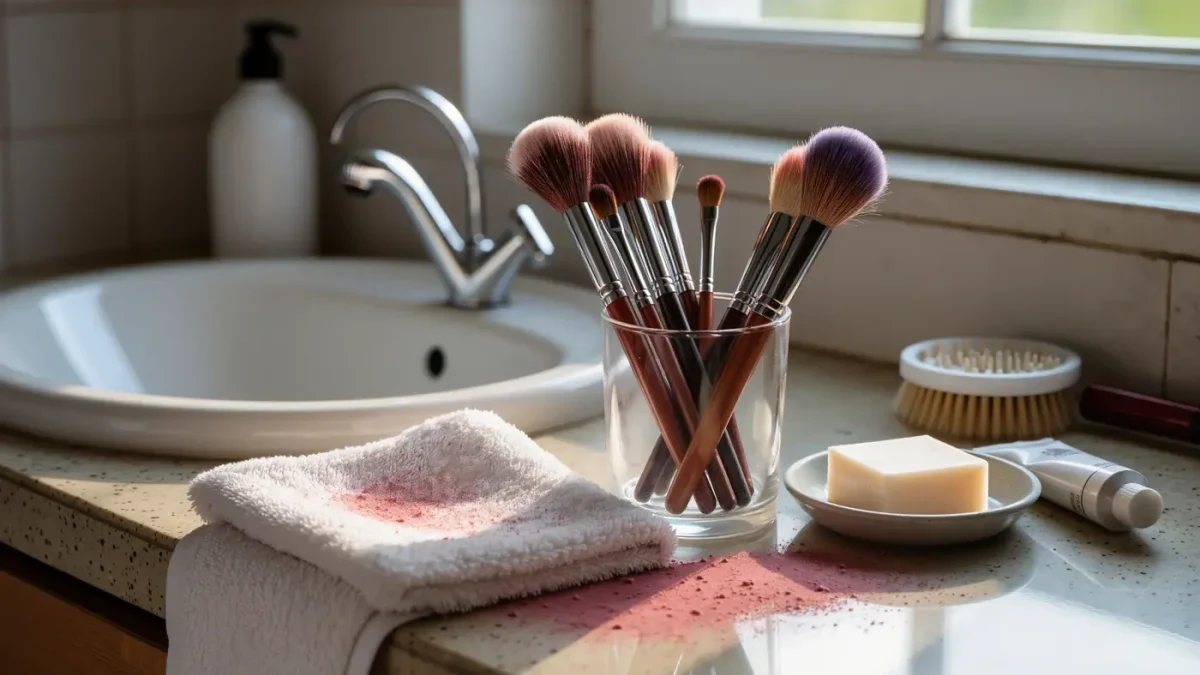
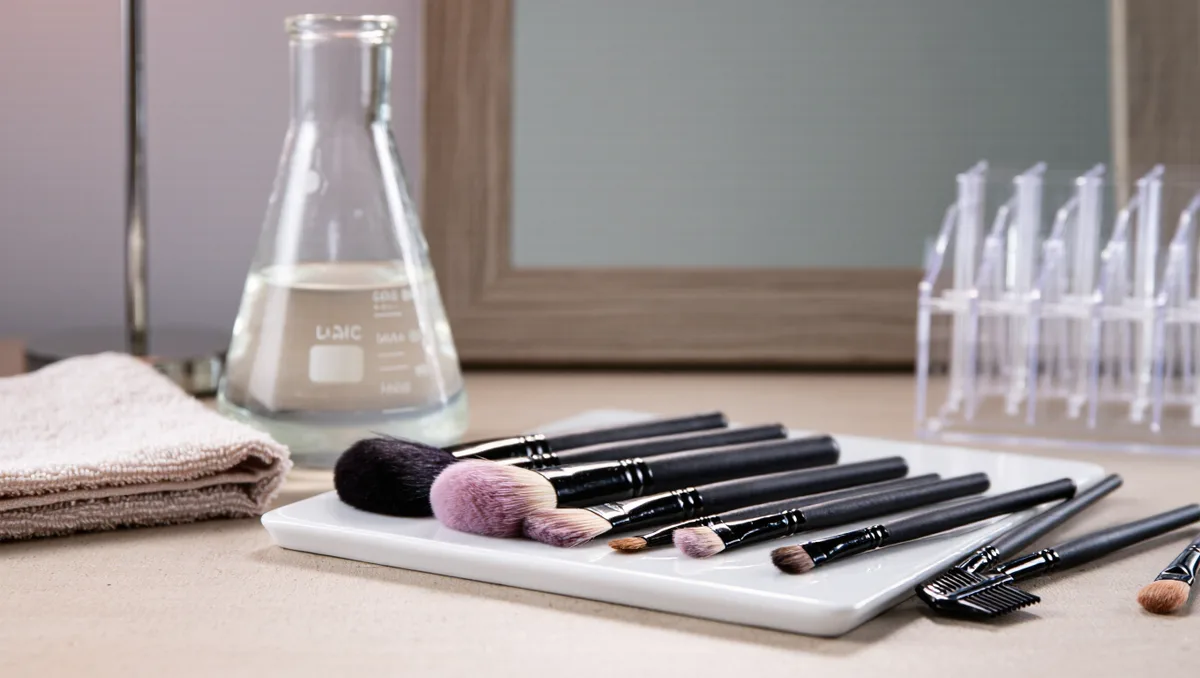
Lukewarm water, a gentle soap, and bristles pointing down — the whole method protects one fragile joint. Run the bristles under lukewarm water only; hot water dissolves the glue inside the ferrule over time. Work a drop of gentle shampoo, castile soap, or a dedicated solid brush soap into the bristles with your palm or a textured board, then rinse until the water runs clear. Squeeze water out with a towel, reshape the head, and dry the brush flat or at a slight angle with the head hanging off a counter edge — never upright in a cup, which drains water into the handle and loosens the glue, and never on a radiator, which warps natural hair. Flat drying takes hours for synthetics and overnight for natural bristles.
- Wet bristles with lukewarm water, head angled down.
- Swirl in brush soap or gentle shampoo.
- Work product out against your palm; repeat until rinse runs clear.
- Squeeze in a towel, reshape the head.
- Dry flat or head-off-the-edge, never upright.
Can you use dish soap, vinegar, or brush cleanser spray?
Dish soap is acceptable in small amounts and is genuinely effective on greasy foundation residue — many dermatologists suggest mild dish soap or shampoo for makeup brushes; just avoid drowning the ferrule and follow with proper rinsing. Vinegar soaks are unnecessary and hard on bristles; skip them. Daily spray cleansers serve a different job: they sanitize the surface between deep washes and are the standard fix for switching eyeshadow colors mid-session, but no spray replaces a wet wash — product still accumulates at the root of the bristles, per brush manufacturers' own care notes. Alcohol-heavy sprays can dry natural hair with repeated use, so reserve them for synthetics and quick color changes.
How often should you replace brushes and sponges?
Sponges age fastest: because their damp, porous interior holds moisture and product, dermatology and brand guidance alike points to replacement every one to three months, or immediately if the sponge tears, stays sour-smelling after washing, or will not return to its original color. Brushes last years with care — the replacement signals are shedding, bristles splaying that reshaping will not fix, and a ferrule that rattles. One non-negotiable stands apart: after an eye infection, discard eye brushes and sponges rather than disinfecting them, which is the standard advice dermatologists give because re-infection from a cleaned-but-not-sterile tool is a known pattern.
Does a dirty brush really cause breakouts?
It contributes, and the mechanism is plausible enough that dermatologists consistently list dirty brushes among aggravating factors for acne — you are re-depositing sebum, dead cells, and bacteria onto skin that is already prone to clogging, plus mechanically pressing product into pores. No controlled trial proves a dirty brush alone causes acne, and honest guidance keeps it that way: the brush is one variable among genetics, hormones, and the products themselves. But among the variables you control, brush hygiene is the cheapest — and the same habit that may protect your skin measurably extends the life of brushes that cost real money.
What is the minimal routine for someone short on time?
A three-line version covers most of the risk. Sunday evening: wash whatever touched liquid or cream products during the week — foundation brush or sponge, concealer brush, liner brushes — and let them dry overnight. Midweek: spray-clean eye brushes after wet looks. Monthly: wash all dry powder brushes. Keep sponges on the every-use schedule, since that is the one tool dermatologists are firmest about, and store everything bristles-up in a dry place once fully dried. Fifteen minutes a week is the entire cost, and it is the difference between tools that serve your skin and tools that work against it.