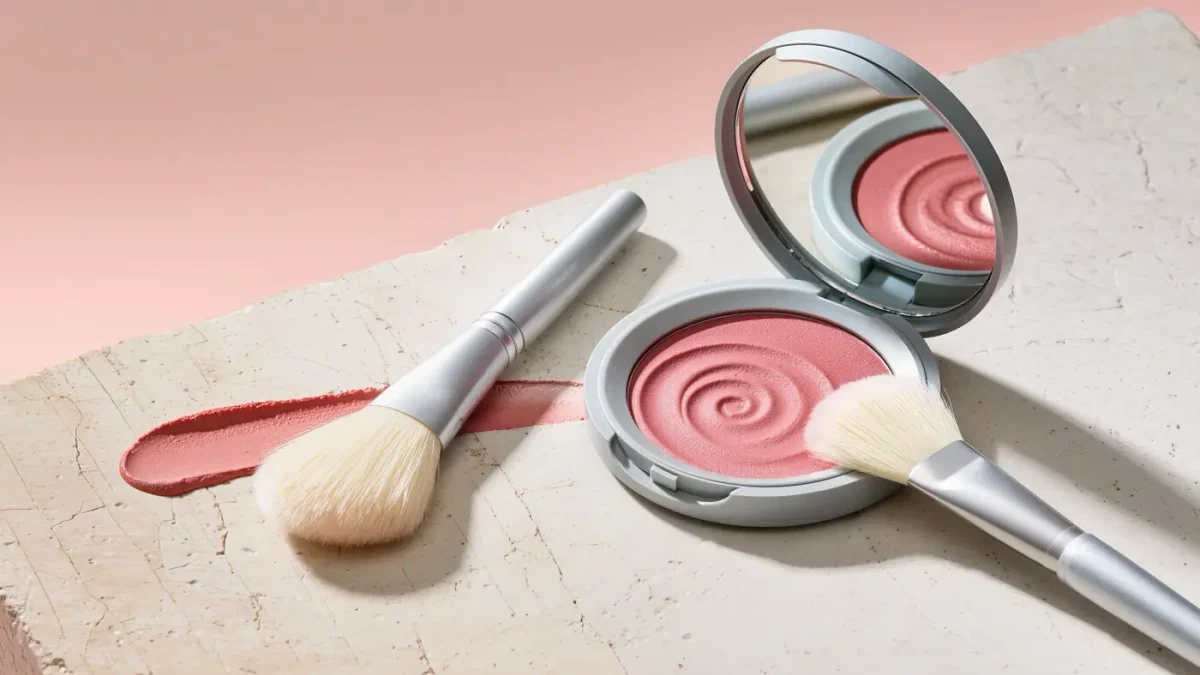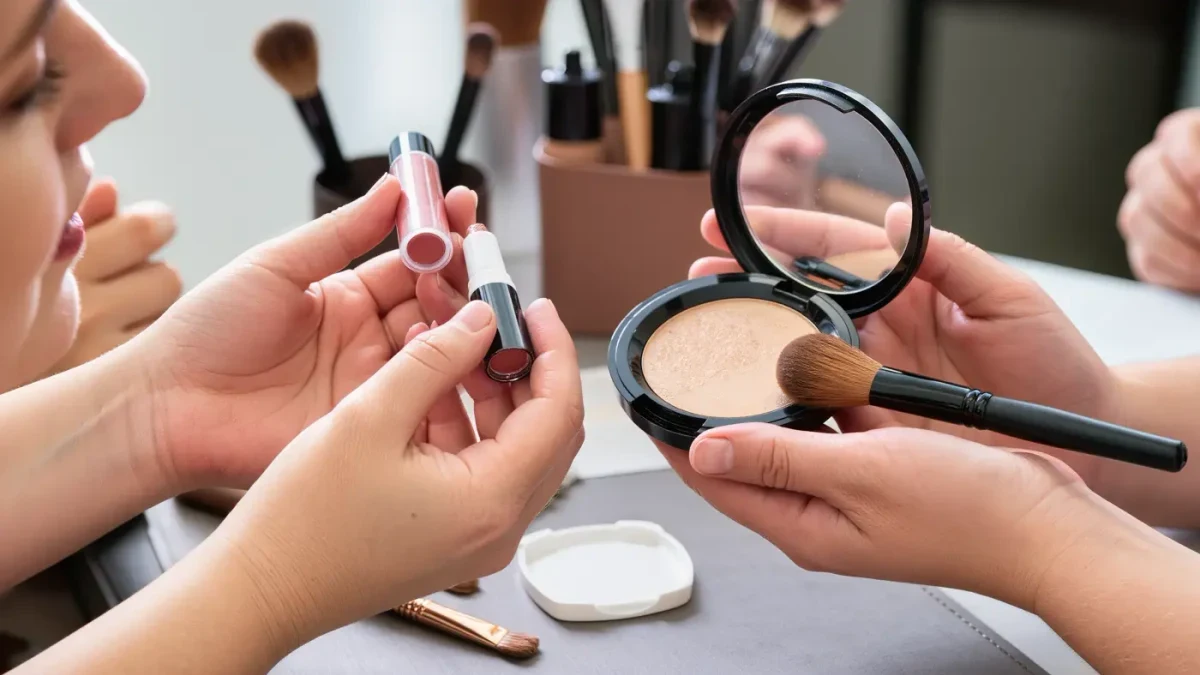
Cream blush suits dry, normal, and mature skin because it melts into skin and moves with it; powder blush suits oily and combination skin because it absorbs the sebum that would otherwise break down a cream. That is the core split, and it follows directly from the formulas: creams are pigment suspended in waxes and oils, while powders are pigment carried by talc, mica, or starch that stays matte by soaking up oil. Makeup artists add a third variable most guides skip — what you wear underneath — because your base choice can flip the formula that works on any given day.
Active acne, rosacea flare-ups, or irritated skin change the calculus: heavier creams can sit in texture and clog prone pores, per dermatologists' general guidance on comedogenicity, so treat flares with a clinician first and makeup second. Below is the technique-level comparison, as working artists teach it.
Why does skin type matter so much for blush?
Because blush sits exactly where skin behaves most differently: the cheek's high point is often the oiliest or, on dry skin, the flakiest zone. A cream on an oily cheek mixes with sebum and slides, usually breaking up within two to four hours. A powder on a flaky cheek clings to the dry patches and spots them pink. The formula that succeeds is the one whose failure mode your skin does not trigger — which is why the same product can be a holy grail for one reader and a write-off for another, and why skin type is a better predictor than price or pigment quality.
When should you choose cream blush?
Choose it when your skin lacks oil or texture that powder would catch: dry, normal, and mature skin types get the most from cream. On mature skin especially, artists favor creams because powder settles into fine lines while a thin cream film moves with expression and reads as a flush rather than a coating. Creams also layer under dewy or sheer bases without fighting them — over a tinted moisturizer or skin tint, cream is nearly the only option that looks integrated rather than dusty. Application timing differs too: cream goes on after base and before any setting powder, pressed with fingers or a sponge in a tapping motion; sweeping drags the base underneath. The trade-offs are real, though — creams need touch-ups on oily skin, can pill over silicone-rich foundations, and stain fingers, per the complaints artists address most often.
When is powder blush the better pick?
Whenever oil is the enemy: oily and combination skin hold powder blush through a full workday because the powder does double duty as color and oil absorber. Powder is also the durability pick for long events, hot weather, and anyone who wears a full-coverage matte foundation — powder bonds to powder, and a cream over a set matte base tends to lift it in patches. The application rule that matters most: powder goes on after your base is set, with a fluffy brush tapped nearly clean before it touches the cheek. On mature skin, artists who do use powder pick fine-milled formulas and a light hand, because heavy talc films emphasize texture; several brands now market finely milled powders specifically for this, per their product descriptions.
| Factor | Cream blush | Powder blush |
|---|---|---|
| Best skin type | Dry, normal, mature | Oily, combination |
| Wear over skin tint / dewy base | Excellent | Poor — can look dusty |
| Wear over matte full coverage | Patches if base unset | Excellent |
| Finish | Dewy, skin-like flush | Matte to satin |
| Layering | Under powder, under cream products | Over set base only |
| Long events / heat | Needs touch-up or lock step | Holds longest |
Can you layer cream and powder blush together?
Yes — it is the standard longevity trick, and the order is fixed: cream first, set it lightly with translucent powder, then powder blush on top. The under-layer gives depth and a skin-like glow; the over-layer locks the color and absorbs the oil that would break the cream down. Artists report this combination surviving long weddings and summer events that defeat either formula alone. Never reverse the order — powder under cream gives the cream nothing to bond to and produces patchy wear.
Where should blush actually go?
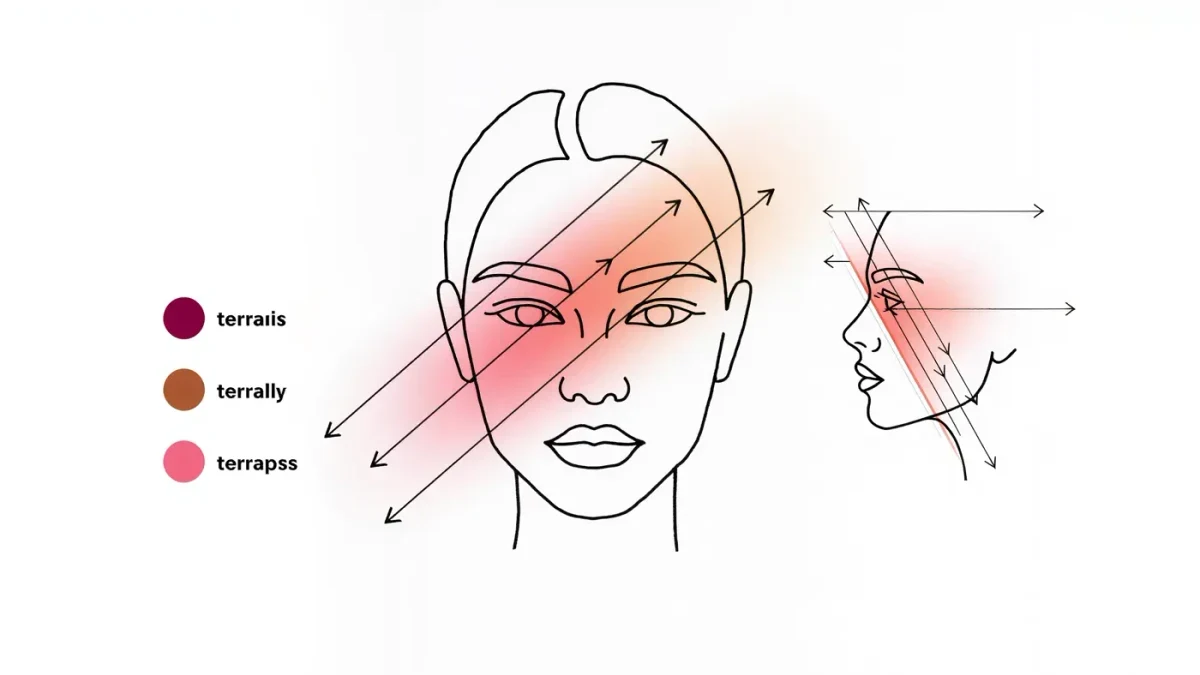
Formula matters less than placement, and the honest answer is that placement follows face shape rather than fashion. Two methods cover nearly everyone: smile-and-tap, where you smile to find the cheek's apples and tap color there, blended slightly back toward the temple — the natural flush position; and the lifted method, where color starts higher on the cheekbone and blends up toward the temple, which visually raises the face and suits mature or longer face shapes. Artists note one consistent error: color placed too low on the cheek drags the whole face downward, whatever formula you use. Blend edges with a clean brush or sponge until no boundary line is visible.
Do cream and powder blush suit different finishes and seasons?
They do, and rotating by season is standard artist practice. Winter and dry indoor heating push skin drier, so creams carry more people through cold months; summer humidity and sunscreen slick push the balance toward powders and long-wear creams. Finish-wise, creams deliver the dewy, second-skin flush that dominates natural-makeup styles, while powders deliver the diffused matte that reads best on camera and in heat. Plenty of artists simply own both and decide each morning by skin behavior: if the T-zone is shiny by ten a.m., today is a powder day.
What about ingredients if you read labels?
The label tells you the failure mode before you buy. Creams built on dimethicone and other silicones can pill over silicone-based foundations unless given time to set, per the layering logic artists teach; creams built on oils and butters slip on oily skin sooner. Powders list talc, mica, or starch — corn and rice starch absorb more oil than mica-dominant shimmer formulas, which skew luminous and suit dry skin better within the powder family. Fragrance in blush is unnecessary and worth skipping on reactive skin, a caveat dermatologists apply to leave-on cosmetics generally. Check the first five ingredients and you can predict how a blush will behave on your face without opening it.