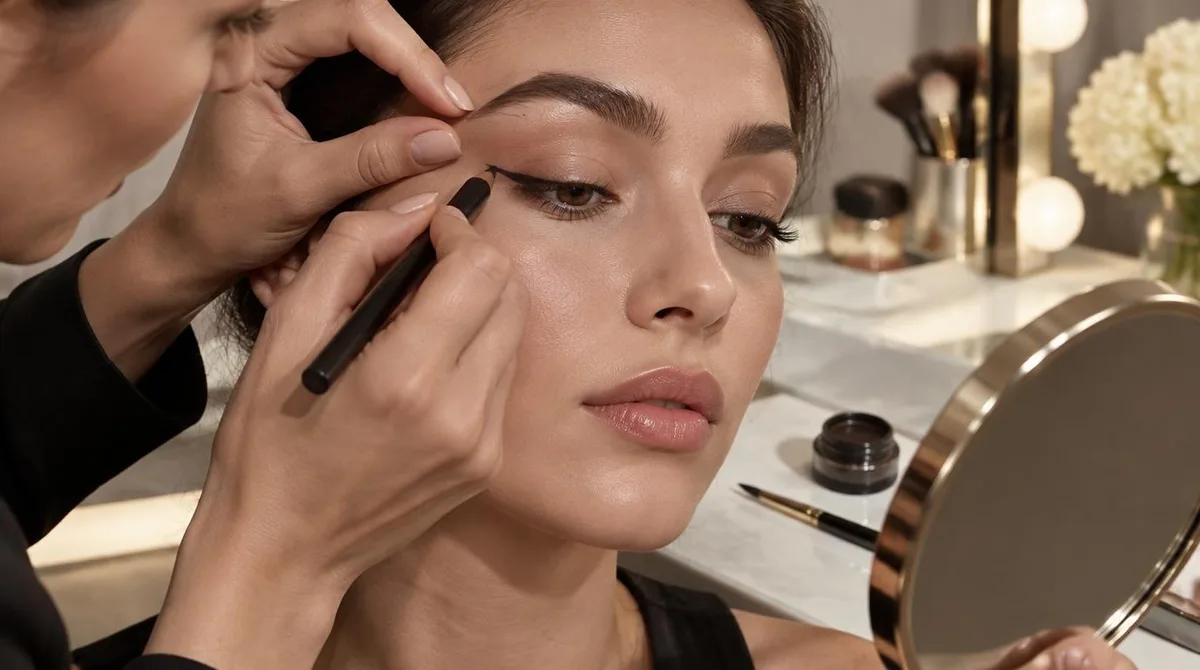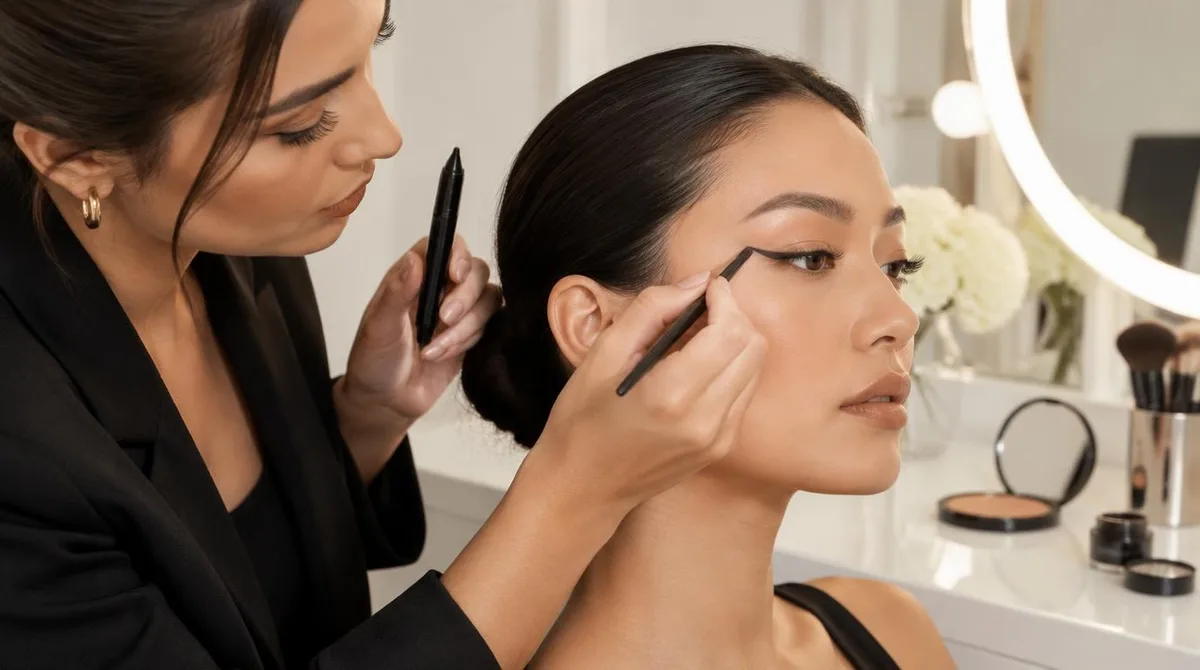
Hooded lids fold over most eyeliner the moment eyes open, so the fix is placement, not more product. Hooded eyes carry an extra layer of skin that droops from the brow bone over the lid, per L'Oréal Paris's guide, which is why a classic wing vanishes on contact. Liner that stays visible moves to the waterline, the outer corner, or the lower lash line.
The pros agree on the starting point. Dominic Skinner, global senior makeup artist for MAC Cosmetics, puts it simply in Who What Wear: any makeup can work on hooded eyes, as long as it adapts to the shape. The adaptations below come from working artists and brand education teams, and each one survives the fold. We covered a connected angle in How to Apply Cream Blush So It Lasts All Day, According to Makeup Artists.
What Are Hooded Eyes?
L'Oréal Paris defines the shape by its anatomy: a fold of skin hangs from the brow bone and covers most or all of the eyelid.The same guide offers a quick self-check. Look straight ahead in a mirror. If no crease shows and the skin beneath the brow droops toward the lash line, the eye is likely hooded. Makeup drawn on the hidden lid simply disappears. The shape runs in families, and it can deepen with age, per Who What Wear. Lids vary, too; some hide more at the outer corner, others all over.
Why Does Standard Eyeliner Vanish on a Hooded Lid?
The fold, not the product, is the problem. When a hooded eye rests open, the upper lid hides behind the brow bone, as Who What Wear notes, so liner drawn along the upper lash line slides inside the crease. Lines drawn thick make it worse. L'Oréal Paris flags heavy liner as the first thing a hooded fold swallows, and notes it can make eyes read smaller, not bigger.
Which Placements Stay Visible All Day?
- Tightline the upper waterline. Skinner's advice, per Who What Wear: bring liner underneath, to the root of the lashes. Color fills the lash line without eating lid space. L'Oréal Paris adds that a darker shade reads as fuller lashes, while a nude liner opens the eye.
- Keep lid lines thin. Thin liner stays clear of the fold; thick liner gets covered by it, per L'Oréal Paris.
- Wing from the outer corner only. Who What Wear suggests skipping the full lash line. Draw liquid liner from the very outer corner outward instead, which lengthens the eye without hiding the work.
- Try reverse liner. Makeup artist Lan Nguyen-Grealis draws along the lower lash line, wings it out, then diffuses the line with a shadow brush while connecting it to the edge of the upper lash line, per Who What Wear. The move adds lift and definition.
How Do You Stop Liner From Transferring?
Transfer is the second battle. Liner prints onto the fold above it as lids move through the day. Both guides fight it the same way.
- 1. Apply with eyes open, looking straight into the mirror, so the result seen is the result worn.
- 2. Choose a smudge-resistant, waterproof formula, per L'Oréal Paris, because transfer onto the upper lid is common with hooded eyes.
- 3. Set the finished line with a matching eye shadow, the finishing step Nguyen-Grealis recommends for a long-lasting result, per Who What Wear.
- 4. Blend with small, dense brushes; L'Oréal Paris calls them the essential tool for precise work in tight lid space.
Conclusion: Work With the Fold, Not Against It
Hooded eyes change where liner lives, not whether it works. Waterline color, thin lid lines, outer-corner wings, and lower-lash-line placement all survive the fold. Waterproof formulas and a shadow set keep them there through the day. The one habit that changes everything: check placement with eyes open, because the mirror shows what everyone else sees. Readers following this should also see How to Stop Concealer Creasing Under the Eyes All Day.