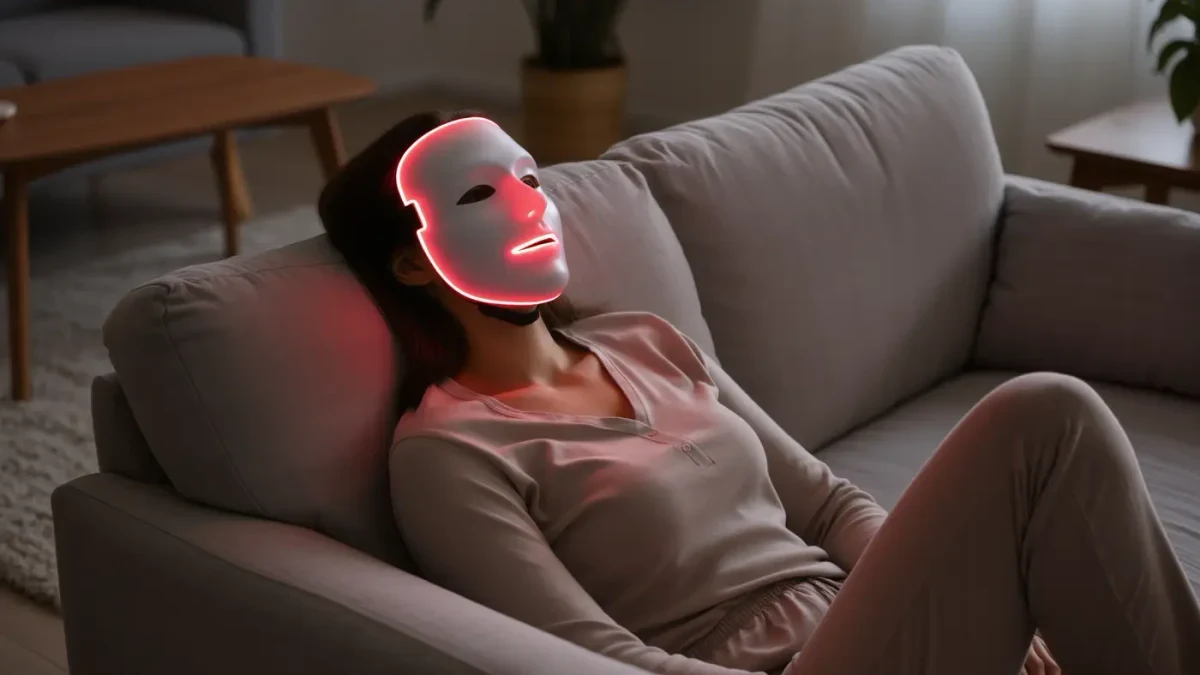
L'Oréal used CES 2026 in Las Vegas to put infrared light at the center of its beauty-tech lineup: on 5 January 2026, the group announced a wireless LED face mask and an infrared hair multi-styler, both named CES 2026 Innovation Award honorees, with launches planned for 2027. The face mask uses red light and near-infrared light in automated 10-minute sessions, per the company's announcement.
Details below come from the brand's own CES materials, so every performance statement here is the brand's claim, not independent verification.
What did L'Oréal actually show at CES 2026?
Two devices, both built around infrared light. The LED Face Mask is a flexible silicone prototype the company developed with iSmart; it runs red and near-infrared light in sessions that time themselves at 10 minutes. The Light Straight + Multi-styler is a hair tool whose glass plates, per the brand, never exceed 320°F, with company testing claims of 3x faster styling and 2x smoother hair than leading premium stylers. Both were named honorees in the CES 2026 Innovation Awards program.
The 2027 timing matters as much as the hardware. Neither device has a price, a final specification sheet, or a retail date beyond the year, per the announcement. Readers who compare serums by concentration will recognize the pattern: the parameters that decide whether a device does anything are the ones not yet published.
Why does the FDA 510(k) step matter for an LED mask?
Because it determines whether the mask can be sold in the United States at all. L'Oréal stated that U.S. availability of the LED Face Mask is subject to the FDA's 510(k) premarket notification process, in which a maker shows its device is substantially equivalent to a legally marketed predicate device, per the FDA's own description of the pathway. Until that clearance exists, the mask remains a prototype with a launch plan, not a product on a shelf.
What should label-readers ask before getting excited?
Three things, none answered by the announcement. First, the actual output: irradiance (light power at the skin) and exact wavelengths, the numbers that separate a working red-light device from a red-tinted light. Second, whether independent testing exists; the announcement cites the company's own claims only. Third, how the device clears regulatory review, since the 510(k) pathway checks equivalence, not whether a mask visibly changes skin. The announcement didn't supply those figures. When they arrive with the 2027 launch, they are the first numbers worth checking.
The styler, for its part, is scheduled to launch globally in 2027 as well, per the company. Hair tools face no equivalent device review, which is why its claims will live or die on published testing rather than an FDA file.