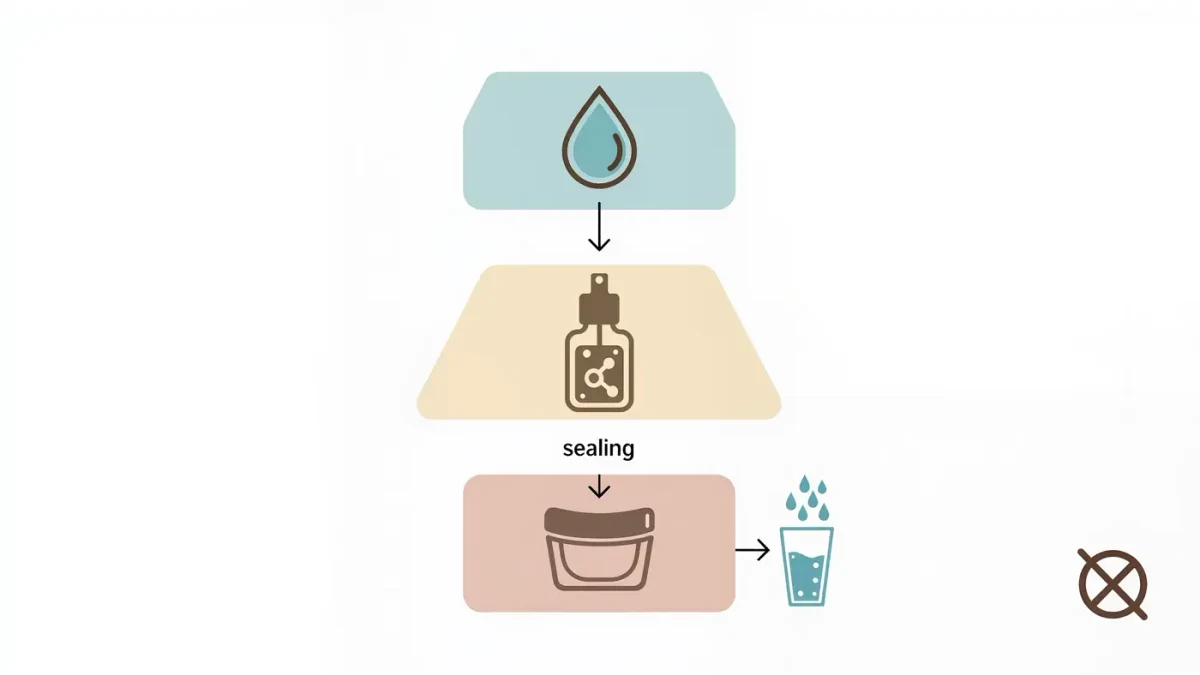
Skin flooding is a layering routine. Hydrating serums go onto damp skin, and an occlusive moisturizer seals them in. Occlusive means water-blocking. The logic has support: humectants absorb water, and damp skin may help water-soluble ingredients sink in, per a Modern Aesthetics dermatology review. The catch is layer count. Stacking more products does not multiply moisture.
The trick rode the social media trend cycle into a dermatology publication. Modern Aesthetics' May-June 2024 guide calls skin flooding supported by science, with effective alternatives. Its routine has three jobs: a wet base, water-loving layers, and a seal. Where the trick works, and where it stops, is where the evidence gets specific. This connects to our earlier piece, Skincare Routine Order: The Right Order to Apply Your Skincare, Step by Step.
What Is Skin Flooding?
Skin flooding involves layering hydration-formulated products onto damp skin, per the Modern Aesthetics review. The published routine runs in this order:
- 1. Cleanse, but keep the skin's natural moisture barrier intact.
- 2. Mist or apply a hydrating base, such as hyaluronic acid, spring water, or aloe vera, to damp skin.
- 3. Layer serums with humectants: hyaluronic acid, glycerin, and niacinamide, a form of vitamin B3, are the review's picks.
- 4. Seal with an occlusive moisturizer, such as petrolatum or shea butter.
That last step is not decoration. Skip it, and the water the humectants pulled up can leave the same way. The seal is the flood's levee. It is the part that holds water in place.
Does Damp Skin Really Absorb More?
Partly, and molecule size decides. Modern Aesthetics notes that damp skin might help certain water-soluble ingredients get in, and calls for more research. A 2016 study in Skin Research and Technology, with Essendoubi as first author, tracked how far hyaluronic acid travels. The method was Raman spectroscopy, a laser scan that maps molecules inside skin. The result split. Low-weight HA, the study's shorthand for small hyaluronic acid, passed through the stratum corneum, the skin's outer layer. High-weight HA stayed out.
That finding cuts both ways for shoppers. A heavier acid films the surface. A lighter one travels further in. Neither result tested the flooding routine itself. The study measured travel, not the trend.
Do More Layers Mean More Hydration?
No. Modern Aesthetics' myth-versus-fact section is blunt: excessive layering can backfire, clogging pores as layers trap sweat, sebum, and bacteria. Wikipedia's moisturizer entry adds a mechanical reason the seal matters. Humectants can pull water from deeper skin layers toward the surface when no occlusive sits on top.
The trend rewards a full shelf. The evidence rewards a tight routine. The seal itself is proven chemistry. A layer of petrolatum can cut the skin's water loss by 50 to 75 percent for several hours, per the same entry. One occlusive film does more work than three extra serums.
How Do You Layer Without Overdoing It?
Keep it short, and stop after the seal. Morning or night works. Damp skin is the constant. The review's guidance is a personal approach built on skin type and real goals. Its framing is honest: skin flooding can improve hydration. It will not erase wrinkles or acne scars.
Sensitivity is a stated limit, not a footnote. Modern Aesthetics reports higher risk of adverse reactions for people with sensitive skin or existing skin conditions. The review also flags rosacea, eczema, and acne as conditions the routine may worsen through irritation and blocked pores. Readers following this should also see Sensitive Skin Care Through Season Changes: What to Adjust and What to Keep.
Conclusion: Does Skin Flooding Deserve a Spot in a Routine?
The core move earns its keep. Wet the skin, lay on a humectant, seal with an occlusive. That order matches what moisturizer science has documented, from humectant behavior to petrolatum's numbers. The flood branding adds ritual, not extra water. Layers past the seal add risk, not hydration. Three layers in order beat seven in a pile, and the payoff is hydration, nothing more.