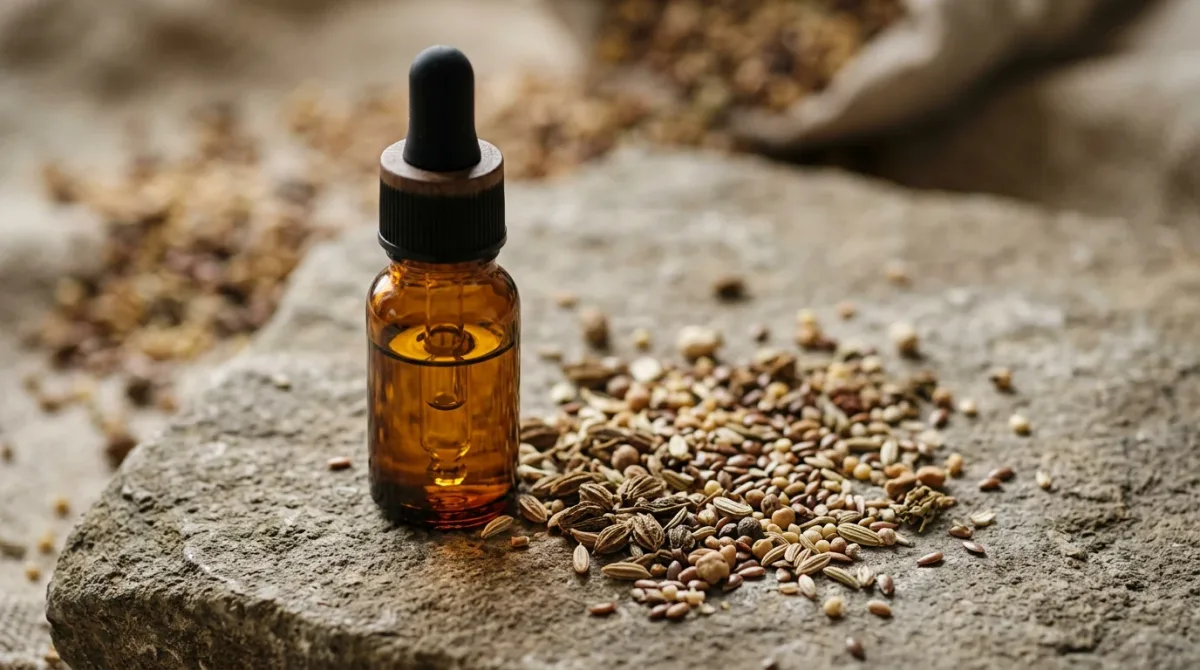
Bakuchiol is a plant-derived compound, extracted from the seeds and leaves of Psoralea corylifolia, that reduced wrinkles and hyperpigmentation about as effectively as retinol while causing less scaling and stinging, according to a 12-week randomized, double-blind trial of 44 patients published in the British Journal of Dermatology. That comparison rests on a single trial, not the decades of research behind retinol.
What Is Bakuchiol?
Bakuchiol is a compound derived from the seeds and leaves of the babchi plant, Psoralea corylifolia, and has a long history in Ayurvedic and Chinese medicine, according to Healthline. Despite its skincare-aisle nickname, it is not chemically related to retinol or any other vitamin A derivative — a distinction confirmed in a 2022 systematic review in the Journal of Cosmetic Dermatology, which noted that bakuchiol shows retinoid-like effects on skin "despite lacking structural similarity to retinoids."
Does Bakuchiol Work as Well as Retinol?
The most direct evidence comes from a prospective, randomized, double-blind trial published in the British Journal of Dermatology in 2019, which followed 44 participants for 12 weeks. The researchers found that "bakuchiol and retinol both significantly decreased wrinkle surface area and hyperpigmentation, with no statistical difference between the compounds." On measures of photoaging and pigmentation, the two performed similarly.
A broader systematic review published in the Journal of Cosmetic Dermatology in 2022, which examined 30 articles including clinical and pre-clinical studies, reached a similar conclusion: bakuchiol showed "significant reduction in photodamage, hyperpigmentation, wrinkle scores, and acne severity" across the in vivo research it covered, positioning it as a retinol alternative with anti-aging, antibacterial, and anti-inflammatory properties. The review's authors also noted that more research is still needed to fully map bakuchiol's dermatological applications.
Is Bakuchiol Gentler on Skin Than Retinol?
Tolerability, not efficacy, is where the 2019 trial found the clearest difference. Participants using retinol reported more facial skin scaling and stinging than those using bakuchiol, leading the study's authors to conclude that bakuchiol "is comparable with retinol in its ability to improve photoageing and is better tolerated than retinol."
Dermatologist Purvisha Patel echoed that distinction to Healthline, noting that bakuchiol "is not a vitamin A derivative and hence not as irritating as that ingredient." Across the 30 studies reviewed in the 2022 systematic review, only one reported adverse event turned up in the literature: a case of contact dermatitis.
How Does Bakuchiol Work in the Skin?
Bakuchiol's effects appear to overlap with retinol's despite the two compounds having no structural relationship. Dermatologist Joshua Zeichner, of Mount Sinai Hospital, told Healthline that bakuchiol "works through the same receptors that retinol uses, which is why many refer to it as a natural retinol alternative." Zeichner added that bakuchiol has no serious downsides, though how it stacks up against retinol on effectiveness remains an open question outside the single head-to-head trial.
Should You Switch From Retinol to Bakuchiol?
Dermatologist Debra Jaliman, of the Icahn School of Medicine at Mount Sinai, told Healthline that "studies have shown that bakuchiol helps prevent fine lines and wrinkles, and helps with pigmentation, elasticity, and firmness" — but cautioned that it likely won't deliver identical results to retinol, which she still considers the gold standard. Patel made a similar point, calling retinol "tried-and-true" with a stronger evidence base built up since the ingredient entered dermatology in 1984, per Healthline's reporting.
Neither dermatologist quoted in that reporting addressed bakuchiol's safety during pregnancy, and this piece is not making that determination either — retinoids are generally avoided in pregnancy on a doctor's advice, and anyone navigating that decision should raise ingredient swaps with their own physician rather than a skincare label. For most other readers, the current research points to bakuchiol as a reasonable substitute for those whose skin doesn't tolerate retinol's scaling and stinging, while retinol remains the better-studied option where tolerance isn't the limiting factor.
Frequently Asked Questions
- Is bakuchiol as effective as retinol? In the one head-to-head randomized trial that has tested them directly, published in the British Journal of Dermatology, bakuchiol and retinol reduced wrinkle surface area and hyperpigmentation by comparable amounts over 12 weeks, with no statistically significant difference between the two.
- Is bakuchiol gentler than retinol? In that same 44-person trial, participants using retinol reported more facial scaling and stinging than those using bakuchiol, which is the main basis dermatologists cite for calling bakuchiol the better-tolerated option.
- Where does bakuchiol come from? It's extracted from the seeds and leaves of Psoralea corylifolia, a plant used in Ayurvedic and Chinese medicine, and it is not chemically related to retinol or other vitamin A derivatives, according to a 2022 systematic review.
- Can bakuchiol help with acne? A 2022 systematic review covering 30 studies found bakuchiol associated with reduced acne severity alongside its effects on photodamage and hyperpigmentation, though the review's authors said more research is needed to confirm its full range of uses.
For a related makeup perspective, read How to Apply Cream Blush So It Lasts All Day, According to Makeup Artists.