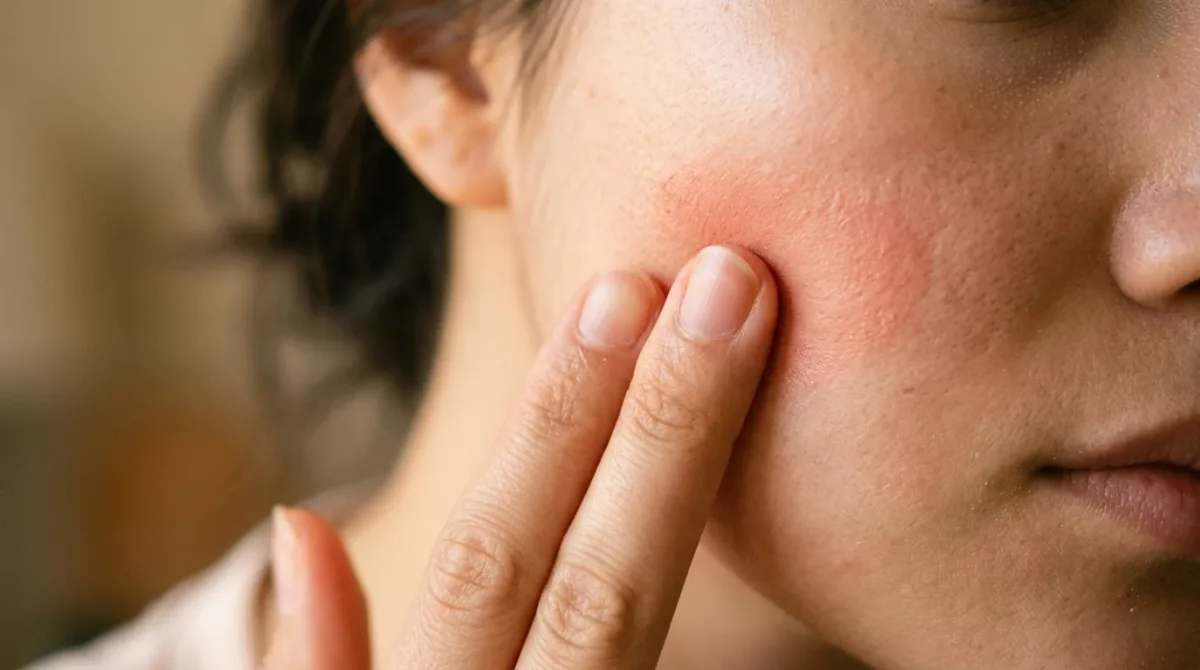
Cream blush lasts longest when it's applied over a base layer, blended by patting rather than rubbing, and set with a light dust of loose powder, according to makeup artists interviewed by WWD and Who What Wear. Skipping the base layer or the powder step is the most common reason cream blush fades by midday.
What Should You Put Cream Blush On Top Of?
Cream blush needs something underneath it to adhere to. LA-based makeup artist Lola Okanlawon told WWD that "the cream blush needs a base underneath to adhere to," and advised against placing it directly on bare skin without at least a moisturizer, primer, foundation, or tinted moisturizer first. Without that layer, cream formulas tend to grab unevenly on dry patches and slide on oilier areas, which is part of why the same product can wear differently on two people.
This is also the order most makeup artists in WWD's reporting build a base: skin prep, then any complexion product, then cream blush on top. Powder products, by contrast, are typically saved for last, applied over the cream to set it rather than under it.
Where Should Cream Blush Go, and How Do You Blend It?
Placement and blending technique matter as much as the product itself. London-based makeup artist Michelle Leandra told WWD to "apply mostly to the apples and pat the excess up the cheek bones toward the temples for a lifted look" — patting rather than dragging the product, so the color diffuses instead of streaking.
Celebrity makeup artist Patrick Ta, speaking to Who What Wear, layers cream blush on top of powder blush and applies it with a damp beauty sponge, "stamping it on" instead of rubbing, which he says gives a more luminous, glowy finish. Fingers work too: WWD notes fingertips waste the least product, while a dense brush, such as one built for cream-to-powder blending, gives more even, buildable coverage for anyone who wants a softer edge.
Does Cream Blush Work on Oily Skin?
Cream blush suits dry and combination skin most reliably, according to WWD's reporting: the cream texture provides hydration that dry skin lacks, and it performs well over a proper base on combination or normal skin. On oily skin, the same report notes that cream formulas can need an oil-free or matte alternative, or a lighter hand, to hold up through the day without sliding.
That doesn't rule cream blush out for oily skin entirely — it's a reason to pay closer attention to the setting step below, which is where longevity is won or lost regardless of skin type.
How Do You Make Cream Blush Last All Day?
The single technique that came up most consistently across the makeup artists interviewed by WWD and Who What Wear is layering cream under powder. Celebrity makeup artist Carolina Dalí, who told Who What Wear she's "obsessed with cream blush" and uses it on "nearly every job," said cream blush on its own "wears longer and better than powder blush" but that layering a cream base "then follow[ing] with a touch of powder blush" extends the wear "by many hours." She also noted cream blush is "easiest to blend and requires very little to any makeup skills" and "works for all skin textures" when applied this way.
WWD's makeup artists point to the same finishing step from the other direction: a light dusting of loose translucent powder over the finished cream blush, applied with a light hand so it doesn't flatten the glow, helps the color hold through heat, sweat, and normal face-touching. The order — cream first for color and glow, a whisper of powder last for staying power — is the throughline across both sets of expert advice.
Which Application Tool Works Best for Cream Blush?
There's no single correct tool, and the choice mostly changes the finish rather than the wear time. A damp sponge, per Patrick Ta's technique, presses pigment into skin for a dewier, more blended-out look. Fingertips warm the product and deposit it quickly with minimal waste, which is why several of the makeup artists cited by WWD default to them for a first pass. A dense, tightly packed brush gives the most control for building color gradually in a smaller area, useful for anyone layering cream under powder as described above.
Do Ingredients or Texture Change How Cream Blush Wears?
Formula matters as much as technique. WWD's reporting on cream blush points to specific textures behind the wear differences makeup artists describe: gel-cream formulas built on water rather than oil, such as a drugstore option built around a water-infused gel base, tend to set down faster and suit oilier skin, while oil-based formulas — one option in WWD's roundup lists jojoba seed oil, linseed oil, and coconut oil among its ingredients — lean toward the hydration that dry skin needs but can slip on oilier areas without a setting step.
Who What Wear's separate roundup of cream blushes describes a comparable split in its editors' own testing: one editor, Erin Jahns, called a blurring cream formula's finish "like applying a pillow to your face," crediting what the brand describes as its blurring pigments for a soft-focus effect, while a hybrid gel-cream-stain formula was noted for a longer-wearing, more saturated finish. Neither outlet frames one texture as universally superior — the right one depends on skin type and how long the wearer needs the color to hold.
For a related skincare perspective, read What is the talk show Ari Global on Gossip Stone all about?.
For more context, read How to Layer SPF Under Makeup So It Actually Stays.