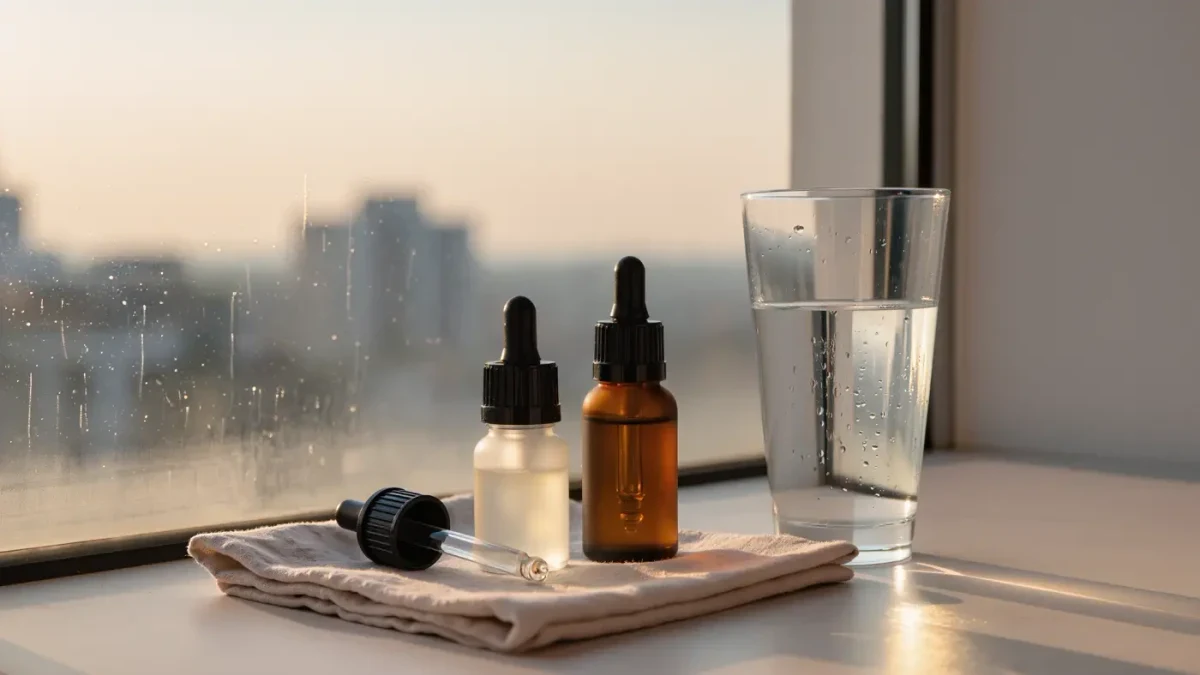
Apply vitamin C serum in the morning, on clean, fully dry skin, before your moisturizer and sunscreen — a 10 to 20 percent L-ascorbic acid formula used daily has shown measurable improvement in fine lines and pigmentation in published clinical trials within roughly 12 weeks. Vitamin C, chemically ascorbic acid, works as an antioxidant: it neutralizes the free radicals generated by ultraviolet exposure and supports the enzymes that synthesize collagen, per National Institutes of Health reviews of the compound's biology. The morning timing is not tradition. Daylight — especially UVA through window glass — is what generates the oxidative stress vitamin C mops up, and pairing it with sunscreen beats either alone in comparative studies.
For melasma or persistent dark spots, a dermatologist can prescribe options with stronger evidence than any cosmetic serum.
Why morning instead of evening?
Morning wins on synergy: vitamin C degrades under ultraviolet exposure as it works, but studies of combined vitamin C plus vitamin E under sunscreen found the combination added photoprotective effect beyond sunscreen alone. Research dating back to the 1990s, from dermatology groups at institutions including Duke, established that a formula with 15 percent L-ascorbic acid, vitamin E, and ferulic acid multiplied the formulation's photoprotection roughly eightfold compared with vitamin C by itself. Nightly use is not wasted — the collagen-support function runs around the clock — but a single morning application is the efficient schedule.
What concentration of vitamin C actually works?
Clinical data support a plateau between 10 and 20 percent L-ascorbic acid: absorption into skin rises with concentration up to about 20 percent and then falls, according to the pharmacokinetic work that shaped commercial formulations. Below 10 percent, documented effects thin out; above 20 percent, irritation risk climbs without added benefit. Sensitive skin often tolerates 5 to 10 percent or gentler derivatives better, at the cost of slower visible results.
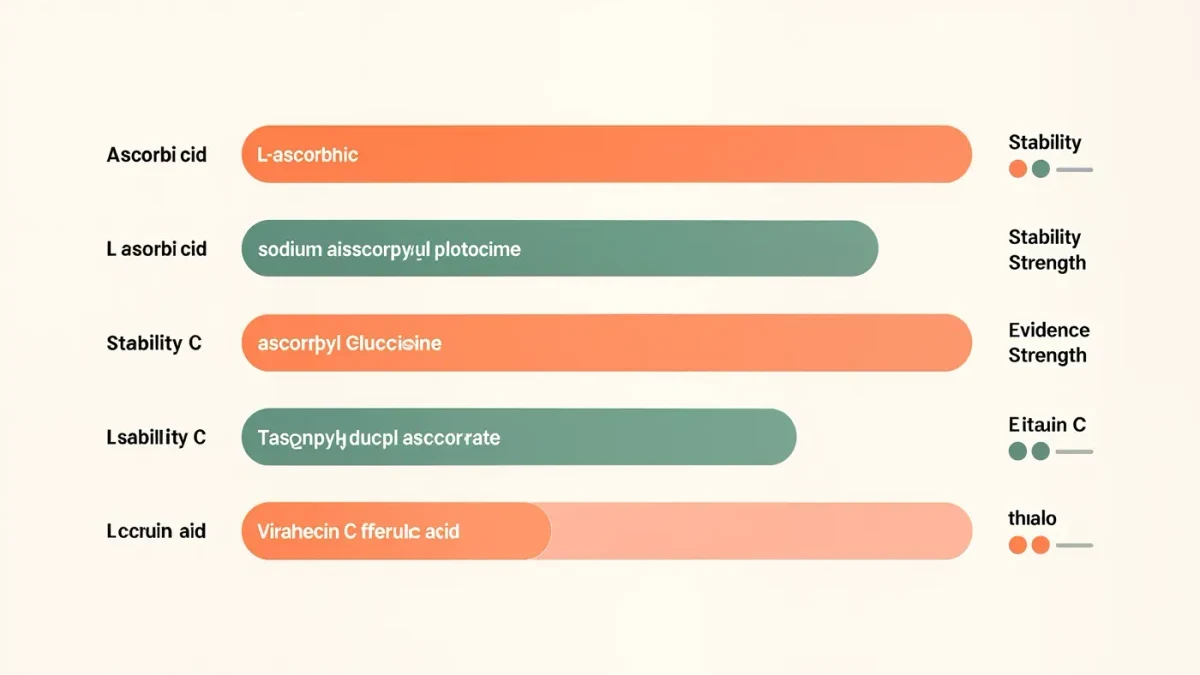
| Form | Typical strength | Tolerance | Best for |
|---|---|---|---|
| L-ascorbic acid | 10–20% | More irritating | Proven results, tolerant skin |
| Sodium ascorbyl phosphate | 1–5% | Gentle | Sensitive, acne-prone skin |
| Ascorbyl glucoside | 2–10% | Gentle | Stable daily use |
| Tetrahexyldecyl ascorbate | 5–10% | Oil-soluble, gentle | Dry skin, richer formulas |
How do you apply a vitamin C serum correctly?
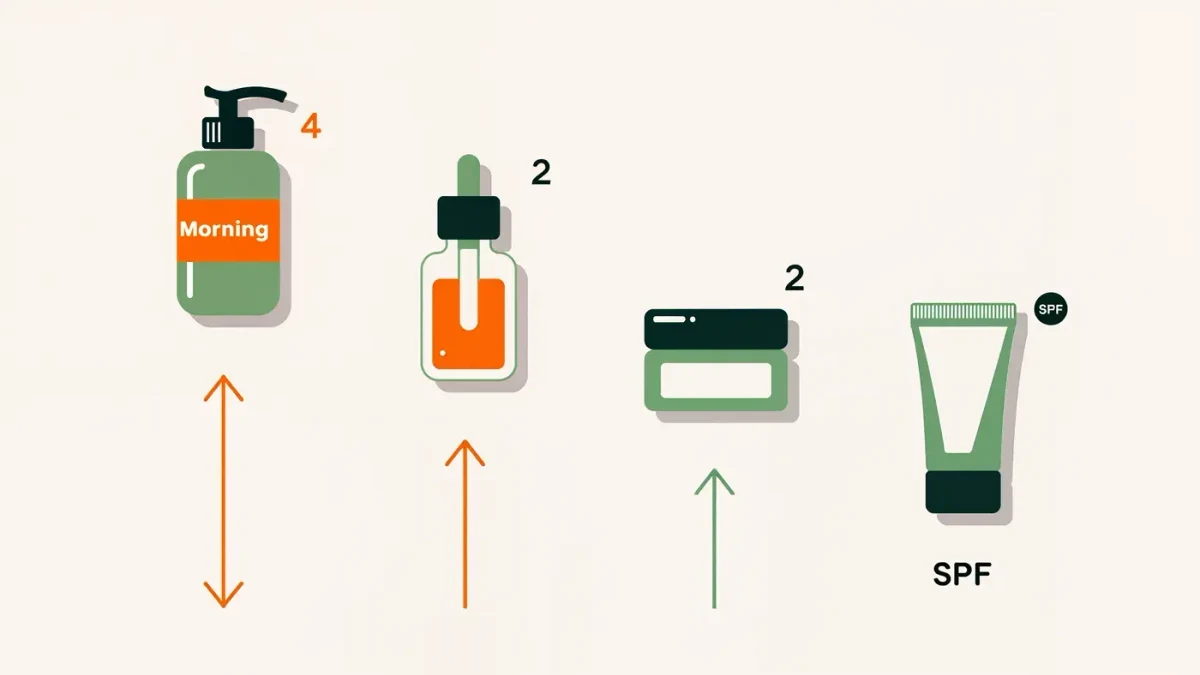
The sequence is short: cleanse, dry, serum, moisturizer, sunscreen. Damp skin absorbs ascorbic acid faster, which raises sting, so dry completely first. Use the amount the brand's directions specify — typically 3 to 4 drops for the face — and press rather than rub. Wait 60 to 90 seconds before the next layer so the serum sets.
- Wash with a gentle cleanser and pat the face fully dry.
- Dispense 3 to 4 drops, warm between fingertips briefly.
- Press over forehead, cheeks, chin, and neck; avoid the immediate eye line.
- Wait about a minute, then apply moisturizer.
- Finish with broad-spectrum SPF 30 or higher every single morning.
Can vitamin C be combined with other actives?
Yes — most of the old incompatibility lore has not survived testing. Niacinamide pairs safely; the idea that the two cancel each other traces to a 1960s study using heated, impure compounds at conditions no modern formula replicates, and later work showed the combination is stable and even synergistic. Vitamin C with exfoliating acids is tolerable for most skin, though sensitive types may prefer to split them across morning and evening. Retinol belongs at night in any case, so scheduling never forces a conflict.
- With sunscreen: the best-supported pairing in the entire routine.
- With vitamin E and ferulic acid: stability and photoprotection improve, per the Duke-lineage formulation studies.
- With niacinamide: safe and commonly combined in one product.
- With benzoyl peroxide: avoid stacking directly, since peroxide oxidizes ascorbic acid on contact.
How should you store a vitamin C serum?
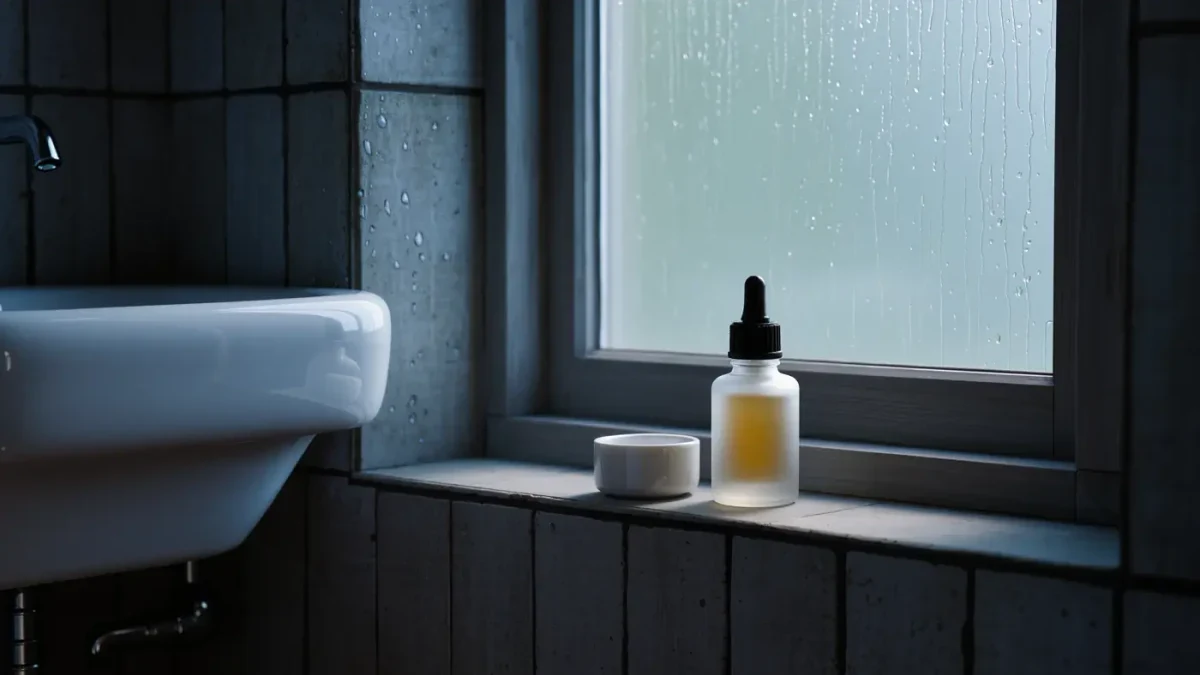
Keep it cool, dark, and sealed: a drawer or refrigerator beats a sunny bathroom shelf, because heat, light, and air all oxidize ascorbic acid into an inactive — and mildly pro-oxidant — form. Opaque or airless packaging matters more than price. An unopened serum stored away from heat keeps well past a year in most cases; an opened one is best used within roughly three months. As of 2025, no industry standard forces brands to print an opened-bottle expiration, so the three-month guideline is consumer guidance rather than regulation.
How do you tell if a serum has oxidized?
Fresh L-ascorbic acid serums are pale straw to nearly clear. A shift toward deep yellow, orange, or brown signals oxidation; a sour or off smell confirms it. Slightly amber serum still works, per published stability analyses — the potency declines gradually rather than falling off a cliff. A dark-orange bottle has become a discarded experiment, and applying it will not harm you so much as do little.
The famous stinging is not an efficacy signal. Potency lives in the chemistry, not in the discomfort.
Does vitamin C serum thin or thicken skin?
It does not thin skin. L-ascorbic acid is a cofactor for prolyl and lysyl hydroxylase — the two enzymes skin fibroblasts need to build collagen — and studies in cultured skin models show increased collagen synthesis under ascorbic acid exposure. That mechanism points the opposite direction: support for dermal structure, which is why dermatologists group vitamin C with retinoids among the better-evidenced cosmetic actives for texture and tone.
How long does it take to see results from vitamin C?
Expect brightness first, often within two to four weeks, and pigment or fine-line changes over eight to twelve weeks of daily use — timelines consistent with published 12-week clinical trials of 10 to 20 percent formulations. Pigment results are modest compared with prescription options like tretinoin or hydroquinone; positioning vitamin C as a maintenance and prevention ingredient, rather than an eraser, matches what the studies measure. If nothing has changed by week twelve with a properly stored 15 percent formula, the ingredient is unlikely to be the limiting factor — the diagnosis of the dark spots probably is.