Professional skincare is cosmetics sold through trained practitioners — aesthetic clinics, beauty salons and similar channels — rather than through mass retail. MT Cosmetics, a Japanese company profiled by The Worldfolio, has built its roughly 20-year-old business on exactly that model, pairing product development it describes as scientifically grounded with specialist education and close support for its business partners.
The distinction matters for anyone who reads ingredient lists. A professional brand does not compete for shelf space or advertising attention. According to The Worldfolio, MT Cosmetics serves aesthetic clinics, beauty salons and a home skincare market, and deliberately stays out of the mass market. That choice shapes what it makes, how it sells, and what it says about evidence.
This explainer unpacks the terms behind that story: what "professional" skincare actually means, what "evidence-based" claims look like when the company making them is also the source, and why a mid-sized Japanese firm finds expanding overseas so hard. If you follow the business side of skincare, this is the segment most coverage skips.
What does "professional skincare" actually mean?
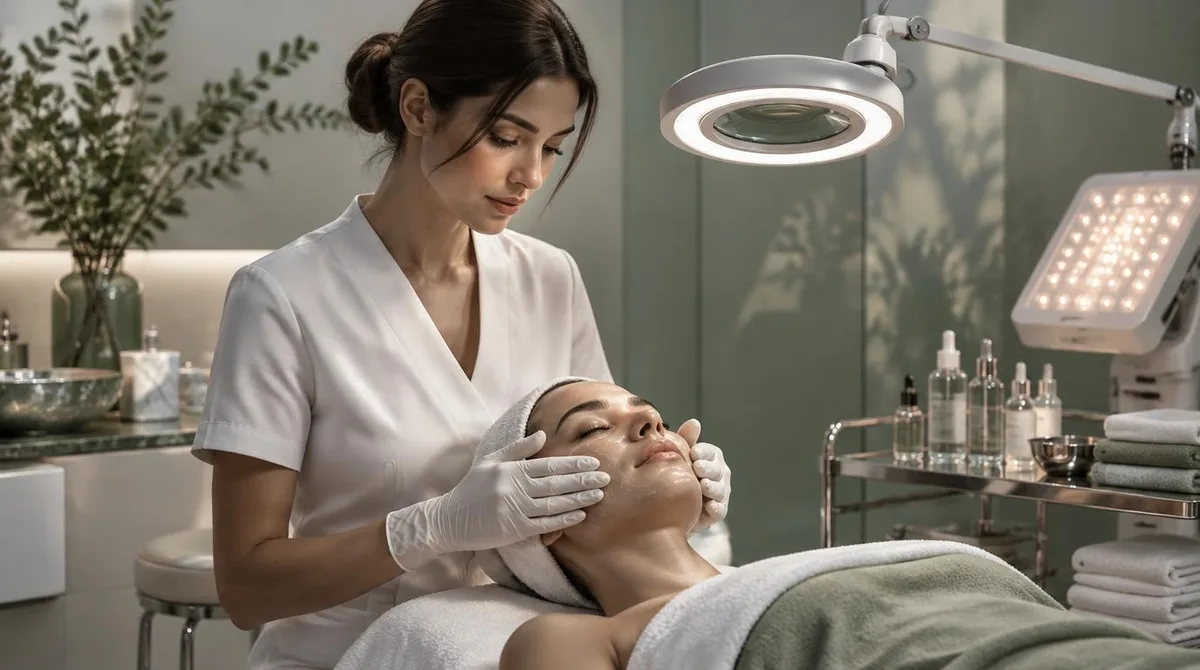
It means the customer is a business, not a browser. MT Cosmetics sells to aesthetic clinics and beauty salons — settings where a trained professional applies or recommends products — alongside a home-use line, per The Worldfolio's interview with the company. The buyer in the clinic channel is a practitioner with their own standards and their own clients to answer to.
That changes the incentives. A mass-market brand wins with packaging, price and visibility. A professional brand wins when a clinic keeps reordering, which depends on whether the products perform in treatment rooms. The company's co-CEO, Rie Itabashi, told The Worldfolio that MT differs from major cosmetics manufacturers "in both scale and the customers we serve," and that this shapes both product development and how the company does business.
It also explains the education piece. The Worldfolio describes MT's approach as combining product development with "specialist education and close support for business partners." Training the people who use the products is part of the sale — a structural difference from retail cosmetics, where the brand's relationship with the end user is usually just the label and the marketing.
What does "evidence-based" mean here — and what should you check?
In this profile, "evidence-based" is the company's own framing. The Worldfolio characterizes MT's development as "scientifically grounded," and Itabashi points to Japan's industry reputation for "meticulous manufacturing, high-performance formulations, scientific research, and an exacting approach to product development." Those are the company's claims about itself, relayed through an interview. A brand is always the primary source for its own positioning.
For a label reader, that means the useful test is the same one that applies to any professional line: what specific research backs a given formula, and is it published and named? The profile describes the philosophy; it does not publish study data. That gap is not a red flag on its own, but it is the difference between a brand saying its development is evidence-led and independent evidence existing for a specific claim. Readers who want the general background on how ingredients get evaluated can compare how dermatologists assess a popular retinol alternative in our bakuchiol and retinol breakdown. We covered a connected angle in How Bakuchiol Compares to Retinol, According to Dermatologists.
The profile also situates the moment: The Worldfolio notes growing consumer interest in "clinical aesthetics, evidence-based skincare, and increasingly sophisticated treatments," with Korean beauty holding a strong international position. Professional-channel brands are riding that same demand for substantiation.
Why is going global so hard for a company this size?
Because the fixed costs do not scale down. Itabashi told The Worldfolio that complying with local regulations, registering products, running safety tests and carrying out required research "all demand substantial financial and human resources." For small and medium-sized enterprises, managing those processes alone is, in her words, "by no means easy."
MT learned this directly in China. The company tried entering that market independently, hit those difficulties firsthand, and now works with a local partner. Even with one, Itabashi says establishing a lasting overseas foundation still presents challenges.
The company has tested lighter-weight routes. Cross-border e-commerce lets it sell to overseas customers while remaining in Japan. Influencer collaborations generated sales, but Itabashi's verdict is blunt: the impact was "like a burst of fireworks" — sales rose sharply and then settled. Attention, she concludes, and a sustainable business are two different problems, and many SMEs face the same one.
Her proposed fix is structural: government support that helps companies develop sales channels, find local partners and navigate regulations. She notes the operating details of such programs still need development, but sees the direction as encouraging — and argues that until now, only companies with deep resources could expand abroad. Readers tracking the retail side of the industry can see the contrast with large-cap beauty economics in our fashion news coverage.
What stays fixed when everything else changes?
The philosophy, not the playbook. Itabashi says that across roughly 20 years, market conditions and customer values have shifted considerably — purchasing behavior, communication channels, how beauty companies engage professionals and end users. What must not change, in her view, is the corporate philosophy and the fundamental approach to making products. What must change: how the company communicates, does business, and uses tools. For related coverage, see How Beauty Licensing Works: Why Your Perfume and Makeup Have Different Owners.
The Worldfolio's profile names one product anchor: Essential Serum, described as an iconic product of the MT Metatron brand. The company is also watching efforts to increase Japanese exports of beauty devices alongside cosmetics, which Itabashi calls hopeful developments for SMEs.
The open question is whether government support programs materialize with enough operational detail to matter. If they do, Itabashi expects more Japanese beauty companies to grow internationally. Until then, the professional-channel model — reorder-driven, education-heavy, partner-supported — remains the part of the cosmetics business where a mid-sized company can hold its ground without a mass-market budget.