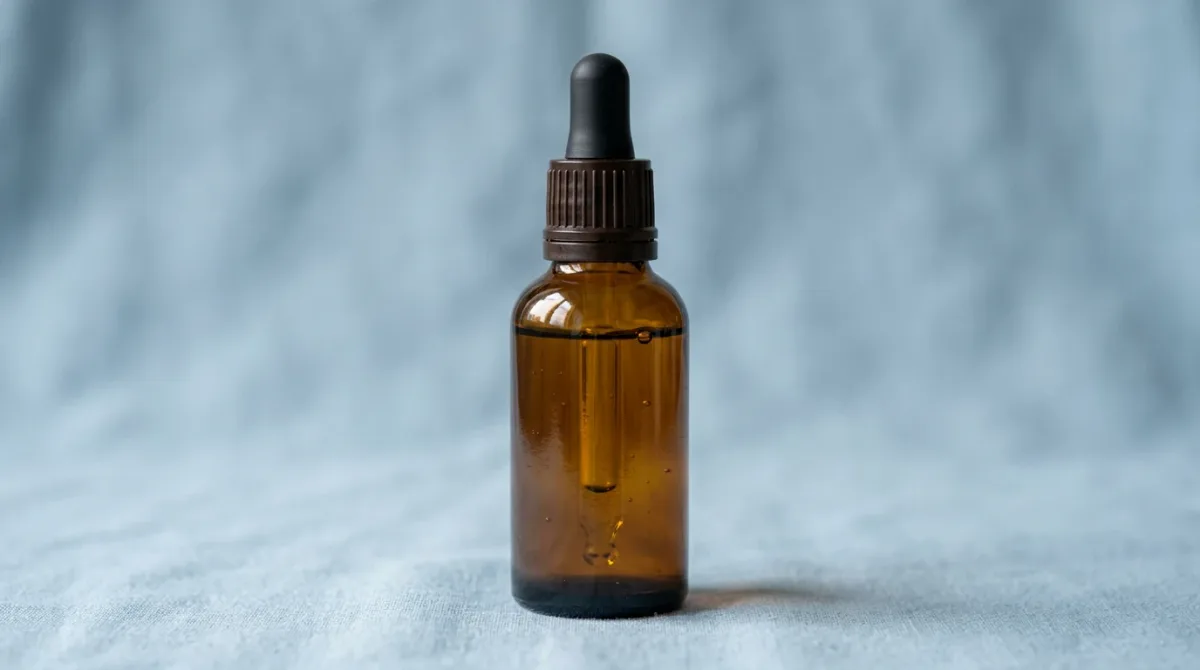
Azelaic acid calms inflammation, slows the bacteria linked to acne, and blocks the enzyme that produces excess pigment, according to a mechanism review published in the journal Cureus. A 15% gel formulation is FDA-approved specifically for the inflammatory bumps of mild to moderate rosacea, per the drug's federal prescribing information, while over-the-counter versions run far lower.
What is azelaic acid?
Azelaic acid is a naturally occurring dicarboxylic acid, found in grains like wheat, rye and barley, that dermatology has adapted into a topical treatment for acne, rosacea and pigmentation, according to the mechanism-of-action review by Mariano-Rodriguez and colleagues published in Cureus in October 2025. Unlike a single-purpose active, it was studied and approved for more than one skin condition, which is part of why it shows up across such different product categories.
How does azelaic acid work on acne and rosacea?
Against inflammation, azelaic acid activates a receptor called PPARγ that blocks the NF-κB signaling pathway, reducing production of inflammatory messengers including IL-1β, IL-6 and TNF-α, the Cureus review reports. It also suppresses an enzyme called kallikrein 5 and a related antimicrobial peptide gene, which lowers levels of a compound called LL-37 that drives much of rosacea's visible redness and bumps.
Against acne-causing bacteria, the compound is transported directly into bacterial cells, where it disrupts their internal pH and interferes with energy production, according to the same review. The authors note this route does not appear to produce the antibiotic resistance associated with older acne treatments. The FDA's approved indication for the 15% prescription gel, sold under the brand Finacea, is narrower than “acne” broadly: it covers “the inflammatory papules and pustules of mild to moderate rosacea,” and the agency's prescribing information states plainly that efficacy for persistent facial redness alone “has not been established.”
Can azelaic acid fade dark spots and melasma?
Azelaic acid interferes with melanin production through two separate routes, the Cureus review found: one carboxylate group on the molecule competes with the amino acid tyrosine for a binding site on the enzyme tyrosinase, and the compound separately boosts levels of a cellular antioxidant that itself inhibits tyrosinase. Board-certified dermatologist Dr. Jessie Cheung told Who What Wear that azelaic acid “helps to inhibit melanin production in sun or age spots,” describing it as both anti-inflammatory and antibacterial in her own practice.
What concentration of azelaic acid actually works?
The two versions on the market are not interchangeable, and the gap in strength is large.
| Form | Concentration | Approved or typical use |
|---|---|---|
| Prescription gel (Finacea) | 15% | FDA-approved for inflammatory rosacea papules and pustules, per the drug's federal label |
| Over-the-counter serums and creams | 3%–10% | Sold as general skincare for texture, acne and dark spots; not FDA-reviewed for a specific indication |
Formulation matters as much as concentration. The 15% gel uses micronized azelaic acid, engineered to a finer particle size than older cream versions, and delivers a significantly higher share of the active ingredient into the skin's living layers — 25.3%, compared with 3.4% for a standard cream, according to absorption data cited in the Cureus review. That gap helps explain why the FDA-approved product is formulated as a gel rather than a cream.
The FDA label instructs applying a thin layer of the 15% gel twice daily to cleansed, dry skin, washing hands immediately afterward, and avoiding occlusive dressings, alcohol-based cleansers and abrasive scrubs during treatment. The most common side effects reported in the drug's trials were burning, stinging or tingling, affecting 29% of users, followed by itching at 11% and scaling or dry skin at 8%.
Can you use azelaic acid with retinol or vitamin C?
Dr. Cheung told Who What Wear that azelaic acid “works with AHAs, BHAs, benzoyl peroxide, and even vitamin C,” and that it's most commonly paired with niacinamide, a form of vitamin B3. She cautioned, in the same interview, that stacking several active ingredients at once “could be irritating to sensitive skin,” which is why she recommends beginners ease in — applying azelaic acid every other day, or layering it with a moisturizer, rather than starting at twice daily.
Does azelaic acid make skin more sensitive to the sun?
The FDA's prescribing information does not list photosensitivity among Finacea's specific warnings, but it does flag a related risk: hypopigmentation, or lightening of skin, in patients with darker skin tones, along with the possibility of eye irritation and hypersensitivity reactions such as swelling or hives. Dermatologists interviewed by Who What Wear frame daily sunscreen as essential during azelaic acid treatment regardless, since any active that speeds skin cell turnover can leave skin more vulnerable to UV damage.
Is azelaic acid safe during pregnancy?
Azelaic acid is gentle enough to be used by most skin types, including sensitive skin, and Dr. Cheung classifies it as a Pregnancy Class B ingredient suitable for treating acne and melasma during pregnancy and breastfeeding, according to her interview with Who What Wear. That guidance describes the ingredient's general safety profile rather than a personal medical recommendation, and anyone pregnant or breastfeeding should still confirm any skincare routine with their own physician before starting it.
For a related beauty perspective, read How to Keep Your Dental Crowns Sparkling and Secure.
For more context, read How to Keep Your Dental Crowns Sparkling and Secure.